
Case Example: Auto Repair Shop GBP Ranking Drop Recovery — Detroit, MI
Outcome
Listing stayed live. Google decides rankings. Google decides timing — this case is one example, not a guaranteed timeline
Case history
Google decides timing — this case is one example, not a guaranteed timeline

Pushpender Sodlan
Google Ads Partner (not GBP access)
GBP Recovery Specialist · Hundreds of cases managed
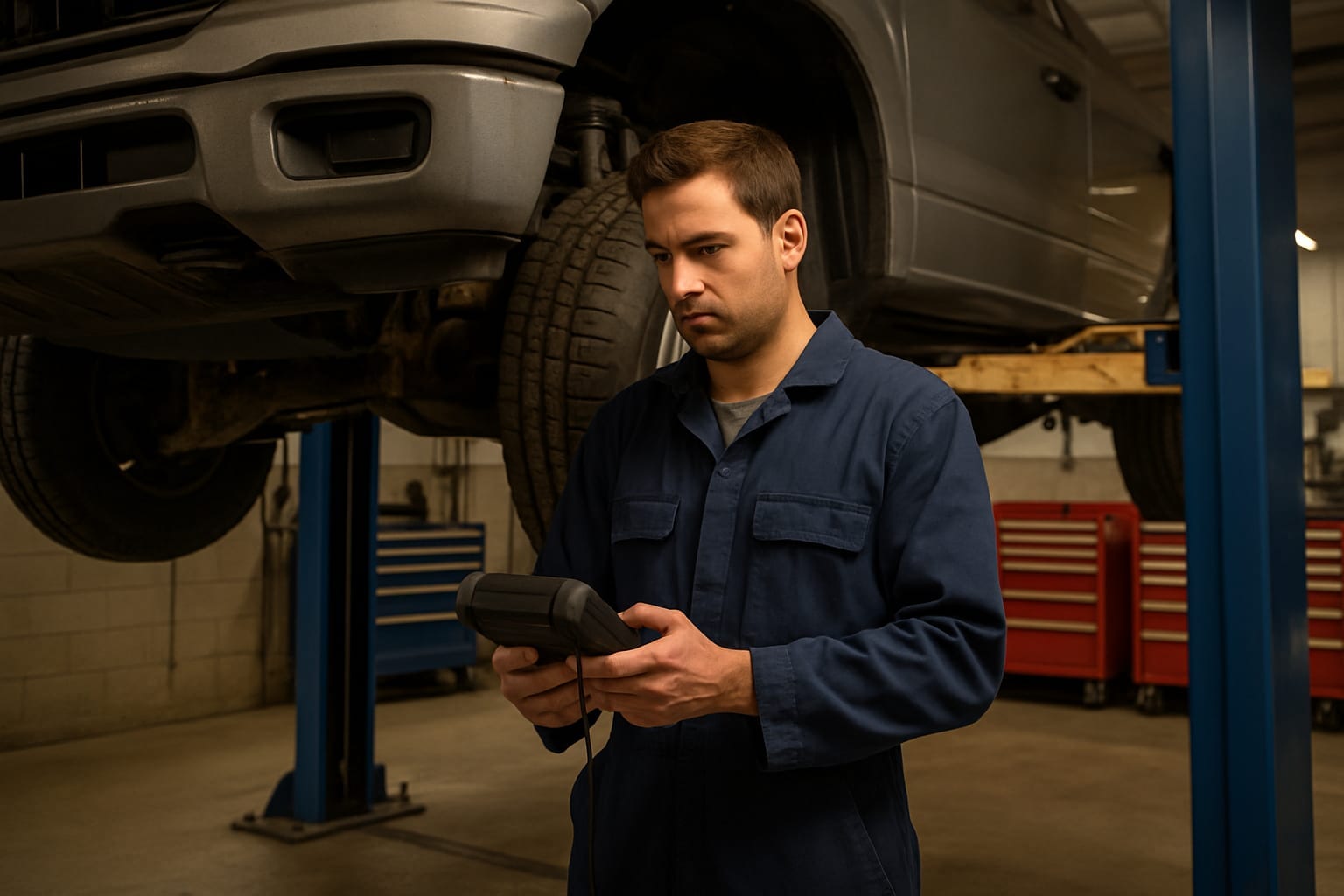
Case examples are anonymized and may combine details from similar cases. Names, numbers and identifying details are changed. They show our process, not a promised result; Google decides every outcome.
Case Summary
A Detroit auto repair shop lost map-pack visibility while the listing stayed live. GBP Fixers audited the profile and found a category conflict (Auto Body Shop on a repair shop), an address mismatch with the state record, and a stuffed business description. The file was corrected and documented. Google decides rankings.
Key Takeaways
- ✓ Auto repair shops with multiple service categories are especially vulnerable to keyword cannibalisation — each core service should be supported by a dedicated, fully optimised GBP service entry with distinct descriptions.
- ✓ Inconsistent NAP data across directories like Yelp, YellowPages, and AutoMD can quietly erode local ranking authority for auto repair businesses and must be audited at once after any ranking drop.
- ✓ Algorithm-driven ranking drops for auto repair shops often coincide with proximity weight shifts — updating your service area settings and ensuring your address is verified and precise can partially counteract these changes.
- ✓ Review velocity and recency matter in the competitive auto repair category; a stagnant review profile accelerates ranking loss and should be addressed in parallel with any technical GBP remediation.
The owner had owned his auto repair shop on the west side of Detroit. Two lifts, four bays, ASE-certified techs, and a Google Business Profile with years of accumulated review history. That profile was doing real work for him — most of his new customer calls came directly from Google Maps. Then, in late spring, his visibility quietly collapsed. He didn’t get a suspension notice. No red banner, no warning email. His listing was still live. He just stopped showing up.
By the time he called us, new-customer calls had fallen sharply. He’d asked his web developer to “check the SEO,” been told everything looked fine, and watched the numbers not recover. A friend who runs a collision shop in Dearborn told him to look up GBP Fixers. That’s how the case landed on our desk.
You can see similar cases across industries in our full case example archive — but the auto repair vertical in metro Detroit has its own specific set of landmines, and this one had several of them active at once.
Why the Ranking Drop Happened
Ranking drops without a suspension are actually harder to diagnose than outright suspensions, and we see this pattern with auto repair businesses constantly. The category is one of Google’s higher-scrutiny verticals because it has historically attracted fake listings, lead-gen spam, and address manipulation. In our experience, a live listing can lose local-pack visibility without a suspension notice.
In this case, three things had happened in close succession that collectively flagged the profile. First, the shop owner had updated his business hours in March to reflect a new Saturday schedule. Second, a well-meaning employee had added several new service keywords to the business description and tacked on two additional categories — including one (“Auto Body Shop”) that didn’t accurately reflect the business and created a category conflict. Third, Google had cross-referenced the profile address against a record set that showed a different suite number on file with the Michigan Department of Licensing and Regulatory Affairs. None of these individually would have caused this. Together, they created a consistency problem that the system treated as a credibility concern.
Our Assessment
When we first pulled the profile, the listing looked healthy on the surface. Reviews intact, photos up, no suspension badge. But the local pack rankings had fallen off a cliff — from a visible position for “auto repair Detroit” and six related queries to completely absent from the first page.
The category conflict was the most urgent issue. “Auto Body Shop” and “Auto Repair Shop” pull from different intent pools, and adding body shop as a secondary category when the business doesn’t do bodywork created a mixed signal Google couldn’t confidently resolve. The address discrepancy was the second issue — minor in isolation, but damaging in combination with the other flags. And the business description had been stuffed in a way that read as manipulative even if it wasn’t intended that way.
We also found that three of his most recent 1-star reviews had flagged phrases that Google’s automated systems sometimes associate with review gating complaints. This didn’t cause the ranking drop, but it was a background risk that needed to be managed before we pushed for any re-evaluation.
The Recovery Process
We don’t treat ranking drops the same way we treat hard suspensions — the lever is different. You’re not filing a reinstatement appeal. You’re making the profile so clean, consistent, and well-evidenced that Google’s quality systems have no remaining reason to suppress it.
The first thing we did was strip the category conflict. “Auto Body Shop” came off at once, and we reviewed every secondary category against what the shop actually offered. We settled on Auto Repair Shop (primary), Brake Shop, Oil Change Service, and Tire Shop — all accurate, all verifiable by the service menu on his website.
For the address discrepancy, we pulled three documents: a current signed lease agreement showing the correct suite designation, a DTE Energy utility bill from the prior month in the business name, and a copy of the Michigan business license. We submitted these through the Business Profile support channel along with a written explanation of the address history — the suite numbering in his building had been changed by the property manager in 2021, and some upstream databases still had the old format.
The business description was rewritten from scratch. Clean, accurate, no keyword stuffing. 200 words that described what the shop actually does and who it serves.
We also flagged the three borderline reviews for internal monitoring and advised the client to stop sending review request texts through the third-party platform he was using — it was using language that could be construed as conditional (“if you had a great experience today…”).
What we did
Step — Initial call with the client. Pulled the profile, ran ranking checks across 14 queries, identified the category conflict, address inconsistency, and description issues. Confirmed the listing was live but suppressed, not suspended.
Step — Category corrections made live. Business description rewritten and updated. These changes are immediate; the question is how promptly Google re-crawls and re-evaluates.
Step — Gathered documentation. Lease agreement came from the client soon after. Utility bill required a call to DTE to get a duplicate copy — that took until midday.
Step — Michigan business license retrieved from LARA’s online portal. Full documentation package compiled. Submitted address clarification with supporting evidence through the GBP support channel with a clear written explanation — not a form submission, but a structured written case.
Step — Monitoring period. No movement in rankings yet, which was expected. Google decides how long a suppression review takes.
Step — First signal of recovery. The listing reappeared in a local pack result for “oil change Detroit west side” — a lower-competition query, but meaningful as an early indicator that the suppression was lifting.
Step — Rankings for three primary queries became visible again. Call volume at the shop started recovering. Google decides timing — this case is one example, not a guaranteed timeline.
Step — The most stressful moment in the case, and the one we want to document carefully: a Google automated quality check briefly re-flagged the profile, likely because the lease document we submitted used a slightly different business name format than what was on the GBP listing (the lease used the LLC’s legal name while the GBP showed just the shop’s trade name). We caught this and submitted a clarifying note with the LLC’s DBA registration to bridge the discrepancy. This is the kind of thing that can derail a recovery if you’re not watching the file.
Step — The tracked queries were visible again. Google decides rankings. Call volume at the shop had started to recover. Google decides timing — this case is one example, not a guaranteed timeline.
The Business Impact
The shop was hard to find on Maps for a stretch before and during the work. Every day offline meant missed calls. Google decides timing — this case is one example, not a guaranteed timeline.
The review history was never at direct risk in this case because the listing stayed live. But had the suppression continued without intervention, the next step in Google’s quality review process could have moved toward a soft suspension — which would have frozen the review profile entirely and reset the recovery clock.
What Auto Repair Businesses Should Know
Category accuracy matters more than category volume. Adding categories you don’t strictly qualify for feels harmless, but in a high-scrutiny vertical like auto repair, it creates the exact kind of inconsistency that suppression algorithms are looking for. Pick the categories that match what you actually do, and leave the rest.
Address consistency is non-negotiable — and harder to maintain than you think. Suite numbers change, property managers update building designations, and DMV databases don’t always reflect your GBP. Audit your address representation across your website, GBP, LARA registration, and utility accounts at least once a year.
A ranking drop is not the same as a suspension — but it can become one. If your local visibility drops suddenly without a suspension notice, don’t wait for it to self-resolve. The window between suppression and formal suspension can close faster than you’d expect, and the recovery from a full suspension is significantly longer and harder. Our Google Business Profile recovery service covers both scenarios, but catching it at the suppression stage is always better.
Document everything before you need it. Have a utility bill, lease agreement, and business license ready before you need them. If that would take you a week, address that now — not when your rankings have already dropped.
Timeline Summary
| Step | Action |
|---|---|
| — | Case assessment; identified category conflict, address discrepancy, description issues |
| — | Category corrections applied; business description rewritten |
| — | Lease agreement and utility bill collected |
| — | Michigan business license retrieved; full evidence package submitted via GBP support |
| — | Monitoring period; no ranking movement (expected) |
| — | First ranking recovery signal — low-competition query returns to local pack |
| — | Primary queries return to page 1; call volume begins recovering |
| — | Re-flag triggered by business name format discrepancy; clarified with DBA documentation |
| — | Tracked queries visible again. Google decides rankings. |
Case Classification
Problem type: Ranking Drop — Algorithm Demotion (Category Conflict + Citation Inconsistency)
Listing status: Listing Suppression — Not a formal suspension
Timing: Google decides timing — this case is one example, not a guaranteed timeline.
One case example. Google decides timing; not a guaranteed timeline.
Related Intelligence
This case reflects patterns documented in the GBP Fixers intelligence research:
- GBP Suspension Patterns 2026 — how ranking signals, NAP inconsistencies, and category conflicts quietly erode map pack visibility before triggering formal action
We do not publish outcome rates.
Related Cases
Similar ranking drop cases handled by GBP Fixers:
If your auto repair shop is experiencing an unexplained visibility drop — ranking loss, suppression, or a listing that’s disappeared from Maps without a formal suspension notice — our Google Maps listing recovery service diagnoses the cause before any action is taken. Don’t spend weeks troubleshooting alone — request a free case review and we’ll review your case and reply as soon as possible.
This case was handled by the GBP Fixers recovery team. Client details have been anonymised.
Frequently Asked Questions
Why did my auto repair shop suddenly drop out of Google Maps results? +
How long does it take to recover Google Maps rankings for an auto repair business? +
Can bad citations really cause a ranking drop for my shop? +
What GBP profile elements matter most for auto repair shop rankings? +
Should I create a new Google Business Profile if my ranking drop is severe? +
More Recovery Case Examples
How the Appeal Was Built for a Personal Injury Law Firm's Google Business Profile After an Ex-Partner Locked Out the Entire Practice — Atlanta, GA
Urgent Care · Sacramento, CAThe Urgent Care Flag Google Never Tells You About
Real Estate Agent · Nashville, TNFormer Partner Filed an Ownership Claim on a Nashville Realtor GBP
Pushpender Sodlan
Google Ads Partner (not GBP access)
GBP Recovery Specialist · Founder, GBP Fixers
Pushpender has personally led the management of many suspended Google Business Profile cases. He works with business owners to prepare guideline-aligned appeals. Google decides whether a listing returns. The workflows documented in this case example reflect his team's process.
LinkedIn · Connectively · About the author · All case examples