
Locksmith GBP Suspension Recovery — London, UK
Outcome
Listing reinstated in 12 days, 74 reviews fully preserved, local pack position recovered within the first week back online
Recovery Time
12 days

Pushpender Sodlan
Google Partner · GBP Recovery Specialist · 500+ Profiles Recovered
Case Summary
A South London locksmith's Google Business Profile was hard-suspended after a category edit and phone number update — two simultaneous changes in a high-scrutiny category that triggered automated review. GBP Fixers identified the cause, built a UK-specific evidence package around MLA membership and Companies House documentation, and secured reinstatement in 12 days with all 74 reviews intact.
Key Takeaways
- ✓ London locksmith profiles face the same elevated Google scrutiny as their US counterparts — but without statutory licensing, UK evidence packages must be built around industry body membership and business registration documents rather than contractor licences
- ✓ Multiple profile edits within a short window can trigger automated suspension, even when each individual change is legitimate — Google's systems detect the combined pattern, not the intent
- ✓ MLA (Master Locksmiths Association) membership is the most useful single document in a UK locksmith reinstatement appeal — it establishes verifiable professional credentials in an otherwise unregulated industry
- ✓ Service area configurations claiming all of Greater London are a consistent suspension trigger for legitimate locksmith businesses, regardless of actual operational area
- ✓ Do not attempt to create a new listing while your original is suspended — duplicate conflicts significantly complicate reinstatement and can result in permanent removal of both listings
James runs a locksmith business in South London. He’s been trading for eight years — residential lockouts, car key programming, commercial rekeying. Seventy-four Google reviews. A 4.7-star rating. A profile that ranked consistently in the local 3-pack for “locksmith Brixton,” “locksmith Streatham,” and “emergency locksmith South London.”
He called us on a Wednesday afternoon. His profile had disappeared from Google Maps four days earlier. He’d noticed it when a regular customer rang to say they couldn’t find the listing to send a recommendation link to a friend.
Four days of lost visibility for a locksmith who generates roughly 65 percent of new enquiries through Google Maps. By the time we spoke, he estimated he’d lost around £900 to £1,100 in bookings — probably more, because that calculation only covers jobs he could directly attribute to Google and doesn’t account for the referral chain that breaks when a profile goes dark.
He hadn’t done anything obviously wrong. That’s usually how these calls begin.
Client Situation
James’s business had been operating cleanly on Google Business Profile for several years. No prior policy strikes. No complaints. Regular posting activity, up-to-date photos, and a review response rate that was better than average for the category.
Two weeks before the suspension, he’d made two changes to the profile in the same week. First, he updated his primary business category from “Locksmith” to “Emergency Locksmith” — a change he made because he’d seen a competitor using that category and assumed it was fine. A few days later, he changed his business phone number because he’d switched mobile providers and wanted calls going to his new SIM.
Neither change, in isolation, would typically trigger an automated suspension. Together, in the locksmith category in London, they did.
Initial Diagnosis
The first thing we do when a locksmith case comes in from the UK is check two things before anything else: the service area configuration and the profile edit history.
The service area was the first problem we could see from the outside. James had his service area set to cover all of Greater London — all 33 boroughs. That’s a configuration which looks identical to what fraudulent London locksmith operations use. A single operative working from Brixton does not realistically serve Barnet, Havering, and Hillingdon simultaneously. Google’s systems know this. A service area claiming all of Greater London on a locksmith profile without a physical address is one of the most consistent suspension triggers in the UK market.
The profile edit history confirmed the second issue. Category change on a Tuesday. Phone number change that Thursday. Two material edits within three business days on a high-scrutiny profile — the automated system flagged the combined activity as a pattern associated with profile manipulation.
Suspension Indicators
We document the specific signals that appear to have contributed to each suspension. In James’s case, three were identifiable.
Signal 1 — Service area over-extension. “Greater London” as a service area for a sole-trader locksmith is inconsistent with what a real operator can deliver. It matches the configuration used by lead-generation fronts that exist only to capture calls and route them to subcontractors across the city.
Signal 2 — Category edit in a high-risk vertical. The locksmith category is one of a small number of business types that Google monitors for category manipulation specifically. Changing from “Locksmith” to “Emergency Locksmith” looks, at the pattern level, like an attempt to target higher-converting search terms — regardless of the intent behind the change.
Signal 3 — Phone number change shortly after category edit. A new phone number, paired with a recent category change, resembles the pattern of profile takeovers — where a third party gains access to a listing and begins substituting their own contact details. Google’s detection systems flag this combination, even when the account holder made both changes legitimately.
None of these signals, in isolation, is definitively suspicious. Together, in the context of the locksmith category in London, they were sufficient for automated suspension.
Investigation Findings
Once we had access to James’s profile and the full edit timeline, the picture was clear. There was no evidence of a manual policy review — this was automated. The suspension notice didn’t cite a specific policy violation, which is typical of automated actions. It simply stated the listing had been suspended for not meeting Google’s guidelines.
What this meant practically: the appeal strategy needed to address all three signals, not just the most obvious one. Filing an appeal that corrected the service area but left the category change unexplained wouldn’t be sufficient.
We also identified a secondary complication. James had no registered business address visible on the profile — he operated as a service-area business, hiding his home address as is standard for tradespeople working from residential premises. That’s entirely legitimate under GBP policy. But it means the evidence package needs to work harder, because one of Google’s primary verification anchors — a verifiable physical address — isn’t available.
Recovery Strategy
The approach we took was built around three decisions made in the first 24 hours.
Decision 1: Correct the profile before filing anything. The service area was reduced to cover South London realistically — Brixton, Streatham, Balham, Tooting, Clapham, Stockwell, Tulse Hill, and the surrounding areas. That’s the geography a one-person operation can genuinely serve. The category was reviewed — we kept “Emergency Locksmith” as it was technically accurate, but added a secondary category of “Locksmith” to make the profile configuration look more standard and less like a keyword insertion.
Decision 2: Build a UK-specific evidence package. This is where UK locksmith cases differ materially from US ones. There is no statutory locksmith licence in England and Wales — the industry is unregulated. We couldn’t rely on a licence certificate as the primary credential document. Instead, we built the package around:
- James’s MLA membership certificate (Master Locksmiths Association) — verifiable independently through the MLA’s public member directory
- His Companies House confirmation showing the company registration number, registered address, and company name matching the GBP listing exactly
- His public liability insurance certificate from a UK broker — specifically one that showed the insured business name and address
- Three months of business bank account statements showing regular transactions under the trading name
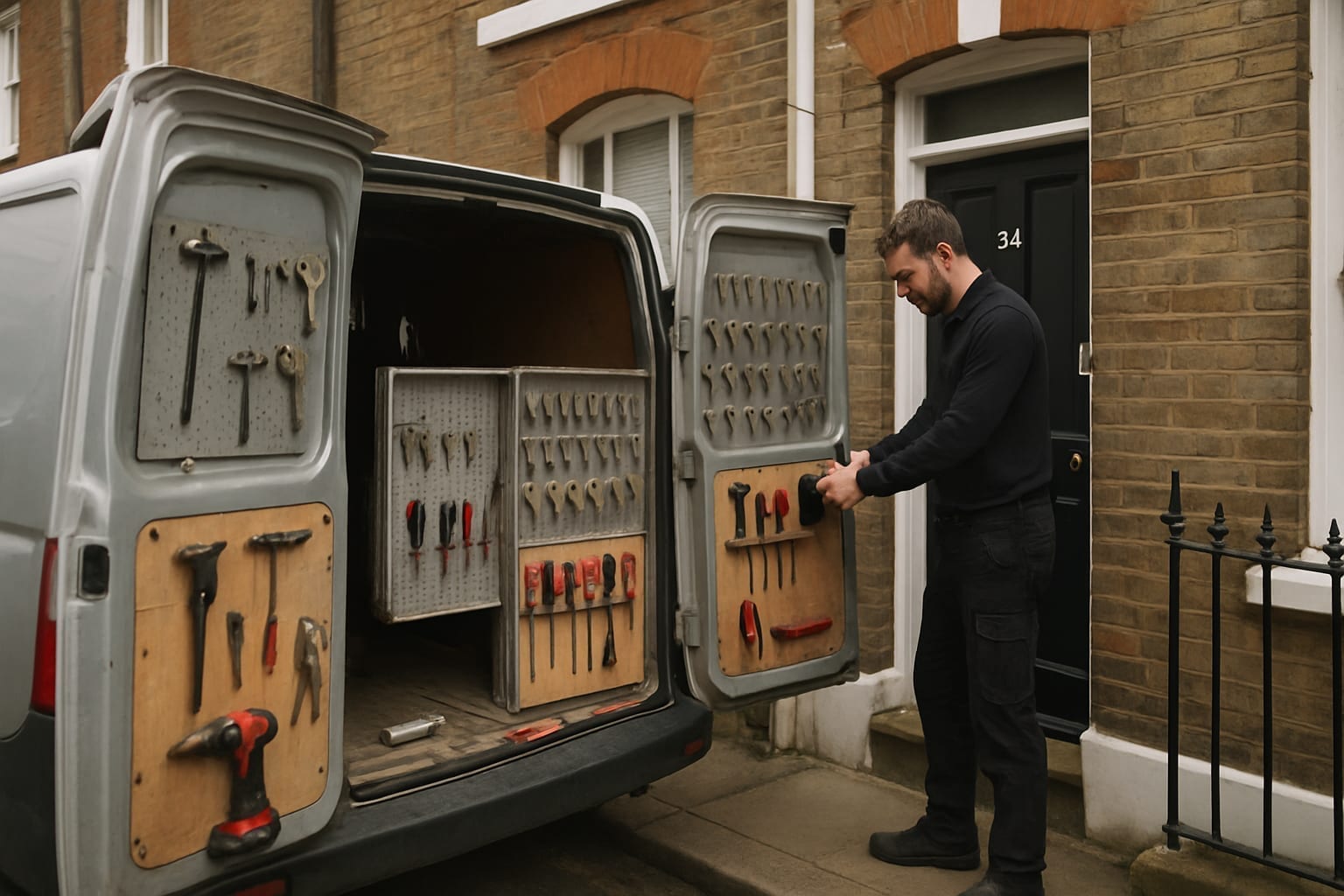
- Photos of his branded van — side and rear — showing the business name, phone number, and website URL clearly visible on the livery
Decision 3: Prepare a structured appeal narrative. We drafted a written submission that described what the profile contained, acknowledged the edits made and explained their context, confirmed the corrections applied, and demonstrated the business’s genuine operational history through the attached documentation.
Documentation Process
Assembling the evidence package took two days. The MLA certificate was immediately available — James had it as a PDF from his membership renewal. Companies House confirmation required logging into Companies House WebFiling and downloading the confirmation statement, a process that took about fifteen minutes.
The insurance certificate came from James’s broker directly, sent via email on the same day we requested it. The bank statements required James to download three months of PDF statements from his online banking portal. The van photos were taken specifically for this submission — we asked for clear daylight photographs showing the full side and rear of the vehicle.
The one document that created a slight delay was the bank statements. James’s initial download included his personal current account rather than the business account. We clarified what we needed and he sent the correct statements the following morning. This is one of the most common issues across all UK cases — most sole traders access personal and business accounts through the same banking app and occasionally download the wrong one. We account for this in the timeline for every UK case.
Communication Timeline
Day 0 — James contacted us. Profile review and edit history analysis completed within two hours. Three suspension signals identified: service area over-extension, category edit, phone number change within close proximity. Hidden address noted as a complicating factor.
Day 1 — Profile corrections applied. Service area reduced to realistic South London coverage. Secondary category added. Documentation request issued to James.
Day 2 — MLA certificate, Companies House confirmation, insurance certificate received. Bank statements received but incorrect (personal rather than business account). Van photos received and suitable.
Day 3 — Correct business bank statements received. Full evidence package compiled and reviewed for internal consistency. Appeal narrative drafted. Complete submission sent via Google Business Profile support channel.
Day 4 — Automated acknowledgement received from Google support.
Day 5 — No update. Expected at this stage. Locksmith cases in the UK frequently queue behind a specialist review team, and the wait between acknowledgement and human review is typically three to five days.
Day 7 — We submitted a follow-up referencing the original case number and confirming documentation was attached and complete.
Day 8 — Google support responded requesting one additional item: confirmation of the business’s operational address. We submitted a recent utility bill in the company name showing the registered address from Companies House, and clarified in writing that this was the business base rather than a customer-facing premises.
Day 10 — Profile status updated from “Suspended” to “Under Review.”
Day 12 — Profile reinstated. Live on Google Maps by mid-morning.
Outcome
The listing came back online with all 74 reviews intact and the 4.7-star rating preserved. James’s phone began receiving calls through the listing within hours of reinstatement.
The local pack position recovered within the first week — he returned to appearing for core terms like “locksmith Brixton” and “emergency locksmith Streatham” within seven days of the listing going live. The exact ranking positions shifted slightly from pre-suspension levels, which is normal. Google sometimes recalibrates ranking signals following a reinstatement, and it typically takes two to four weeks to fully stabilise back to baseline.
The 12-day suspension had cost James an estimated £1,300 to £1,600 in lost bookings. That figure is based on his average daily enquiry volume through Google Maps and his average job value. The actual cost is higher when you account for customers who found a competitor during the outage and may not return — a downstream loss that’s invisible in the short term but very real in the locksmith trade, where repeat customers and word-of-mouth referrals account for a significant portion of ongoing revenue.
Lessons Learned
The locksmith category has no grace margin in London. Google’s automated systems for the London locksmith market are calibrated aggressively because the problem of fraudulent listings in this city is severe and ongoing. Legitimate operations with clean histories get caught in the same detection logic as the fraudulent ones. Building and maintaining a profile that looks unambiguously legitimate — realistic service area, accurate business name, consistent contact details — is the only reliable protection.
Edit one thing at a time. If you need to update your category, do it. Wait at least 30 days before making another material change to the profile. If you need to update your phone number, do it separately and at a different time. Multiple profile edits within a short window create combined signals that automated systems are specifically configured to detect.
MLA membership is worth maintaining for reinstatement purposes alone. Locksmiths without MLA membership can still be reinstated, but the evidence package is harder to assemble convincingly. The MLA certificate functions as an independent, verifiable credential — something that’s difficult to replicate through other documents in an industry with no statutory licensing requirement. Even if you’ve never used your MLA membership for anything else, it’s the single most useful document in a UK locksmith reinstatement case.
Your service area should reflect what you can genuinely deliver. If you’re one operative with one van, covering Greater London is not a realistic service area. Covering South London, or a named set of specific boroughs, is. A smaller, accurate service area looks far more credible during a reinstatement review than a maximally expansive one. You can adjust it back once the listing is reinstated and stable for a period.
For more on GBP suspension recovery and how the process works for UK locksmith businesses — including what documentation we need and what to expect at each stage — see our service page. When you’re ready to get eyes on your specific situation, request a free case review and we’ll tell you exactly what we’re working with.
Timeline Summary
| Day | Action |
|---|---|
| Day 0 | James contacted us. Three suspension signals identified: service area, category edit, phone number change. Profile review complete within two hours. |
| Day 1 | Profile corrections applied. Service area reduced to South London. Secondary category added. Documentation requested. |
| Day 2 | MLA certificate, insurance certificate, van photos received. Bank statements required re-request — personal account submitted initially. |
| Day 3 | Correct business bank statements received. Evidence package complete. Appeal narrative drafted and full submission sent. |
| Day 4 | Automated acknowledgement received from Google support. |
| Days 5–6 | Waiting period. Follow-up submitted Day 7 referencing original case number. |
| Day 8 | Google requested operational address confirmation. Utility bill and written clarification submitted same day. |
| Day 10 | Profile status updated to “Under Review.” |
| Day 12 | Listing reinstated. All 74 reviews intact. Local pack recovery began within the first week. |
Case Classification
Problem type: Hard Suspension — High-Risk Category (Combined Profile Edit Signals: Category Change + Phone Number Update)
Suspension classification: Hard Suspension — Service Area Business
Recovery time: 12 days
Related Intelligence
This case reflects patterns documented in the GBP Fixers intelligence research:
- GBP Suspension Patterns 2026 — the role of combined profile edit signals in triggering automated suspensions, and why locksmith and contractor categories face elevated detection sensitivity across all markets
- UK GBP Suspension Patterns 2026 — UK-specific patterns covering locksmith category enforcement sweeps, the simultaneous-edit trigger described in this case, the UK documentation framework (Companies House, MLA, Gas Safe), and why London dominates the UK suspension caseload
Outcome data for locksmith suspension cases is tracked in our GBP recovery statistics.
Related Cases
Similar suspension cases handled by GBP Fixers:
- Locksmith: Hard Suspension Recovery — Los Angeles, CA
- Electrician: Hard Suspension Recovery — Las Vegas, NV
- Plumber: Three Reinstatement Denials — Houston, TX
This case was handled by the GBP Fixers recovery team. Client details have been anonymised.
"
We had no idea the changes had triggered anything. One day the listing was there, the next it was gone. GBP Fixers explained exactly what had happened and managed the whole reinstatement — we just provided the documents they asked for. Twelve days felt like a long time, but we knew it was being handled properly.
— James H., Owner — South London Locksmith
Frequently Asked Questions
Why do London locksmith GBP listings get suspended so frequently? +
How long does GBP reinstatement take for a locksmith in the UK? +
What documents does a UK locksmith need to reinstate a suspended Google Business Profile? +
Will my Google reviews be lost if my GBP is suspended? +
Should a London locksmith try to reinstate their GBP themselves or use a specialist? +
More Recovery Case Studies
Electrician GBP Suspension Recovery — Las Vegas, NV
Flooring Company · Indianapolis, INThe Flooring Company Trapped in a Video Verification Loop After Moving Its Address to a Storage Unit
Hair Salon · Kansas City, MOSuspended Over a Suite Number: A Kansas City Salon's 14-Day GBP Recovery
Pushpender Sodlan
Google Partner · GBP Recovery Specialist · Founder, GBP Fixers
Pushpender has personally led the recovery of 500+ suspended Google Business Profiles for businesses across the USA, UK, and Canada. As a certified Google Partner and specialist in GBP suspension reinstatement, he works with business owners every day to navigate Google's policies and get listings back online fast. The workflows documented in this case study reflect his team's actual recovery process.