
Case Example: Electrician GBP Suspension Recovery — Las Vegas, NV
Outcome
Listing reinstated. Review history intact. Google decides the outcome. Google decides timing — this case is one example, not a guaranteed timeline
Case history
Google decides timing — this case is one example, not a guaranteed timeline

Pushpender Sodlan
Google Ads Partner (not GBP access)
GBP Recovery Specialist · Hundreds of cases managed
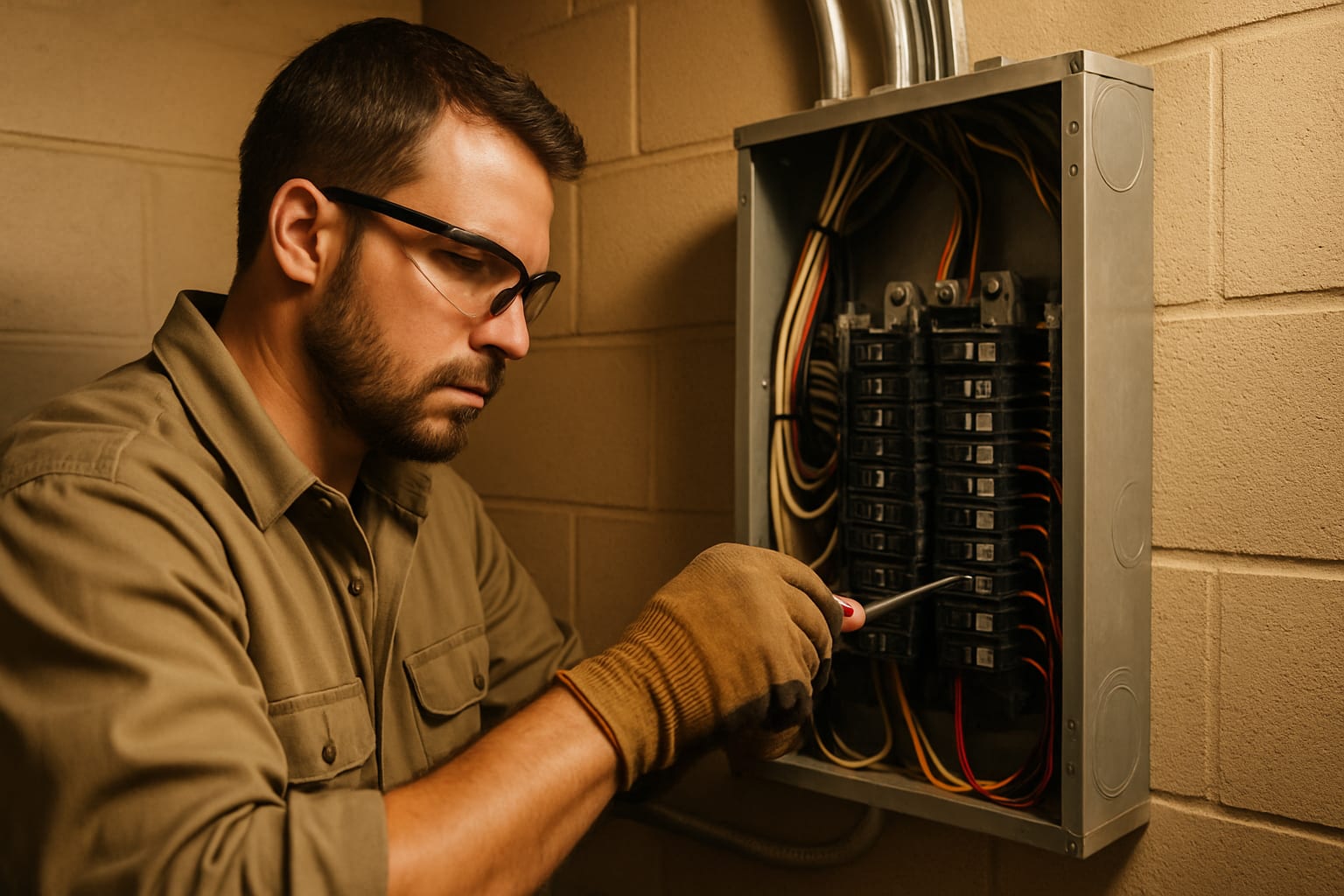
Case examples are anonymized and may combine details from similar cases. Names, numbers and identifying details are changed. They show our process, not a promised result; Google decides every outcome.
Case Summary
A Las Vegas electrician lost all inbound Google leads when his Business Profile was hard-suspended without a clear explanation. GBP Fixers audited the listing and identified a service-area expansion, a description edit, a VoIP number, and a license-name mismatch. We prepared the appeal. Google restored the profile. Review history intact. Google decides rankings.
Key Takeaways
- ✓ Electricians operating as service-area businesses must remove a physical street address from their GBP if the location is not a staffed commercial office — an exposed home address is a leading suspension trigger in the trades.
- ✓ A cluster of profile edits — service area, description, and phone — can flag an electrician listing even when each edit looked routine on its own.
- ✓ A suspension appeal without documented proof of licensure, insurance, and service-area legitimacy is routinely rejected — Nevada contractor license documentation was critical evidence in this reinstatement.
- ✓ Losing a Google Business Profile mid-season in a high-competition market like Las Vegas means missed jobs. Google decides timing.
An electrical contracting business in Las Vegas was the subject of this case example. He had review history, a steady stream of inbound calls from homeowners and property managers, and a Google Business Profile that drove many of his leads. Then one morning he opened Google Maps, searched his own business name, and saw it: “This listing has been suspended.”
He called us two days after the suspension hit. By that point he had already tried disputing it himself through the dashboard, gotten nowhere, and watched his call volume drop from roughly 12–15 inbound leads per day to almost zero. In Las Vegas, where competition among licensed electricians is intense and customers rarely scroll past the local pack, two days offline felt like two weeks anywhere else.
If you want to see how other suspended profiles in different industries get resolved, our full case example archive covers the range of what we deal with. But this one was worth documenting specifically because it had a wrinkle that almost cost us an extra week.
Why the Suspension Happened
We see this pattern with electrician businesses constantly. Electrical contractors in Nevada — and particularly in the Las Vegas metro — operate in a licensing environment that Google’s automated systems struggle to interpret correctly. Licensed electricians are required by Nevada law to hold a state contractor’s license (C-2 classification), and many of them list the business under a trade name that differs slightly from the legal entity name on that license. That mismatch, even a minor one, is enough to trigger a hard suspension under Google’s quality guidelines for service-area businesses.
The owner had made two changes to his profile about three weeks before the suspension: he updated his service area to reflect a broader coverage zone after taking on a commercial client in Henderson, and he changed his business description. Neither change seems consequential. But the combination of edits in a short window, combined with the fact that his business phone number had recently been ported to a VoIP line, flagged the profile for review. In our experience, a recently ported VoIP number is something reviewers look at, particularly in contractor categories where fake listings are common.
The Las Vegas electrical category is genuinely one of the more heavily gamed verticals on Google Maps in Nevada. Fake lead-gen profiles, listings that use residential addresses to fake physical presence, and keyword-stuffed business names are everywhere. The automated detection sweeps that catch those bad actors also sweep up legitimate businesses like the owner’s — and the criteria that makes something “suspicious” are not disclosed publicly, which is why self-filing an appeal without knowing what triggered the flag rarely addresses the real issue.
Our Assessment
When the owner came to us, his first assumption was that the VoIP number was the entire problem. It wasn’t — or rather, it wasn’t the only problem. When we pulled the full picture, we identified three compounding issues: the service area expansion, the description edit, and the phone number flag had together pushed the profile past a threshold. Google’s reinstatement process requires you to resolve what the system flagged — not what you think it flagged — and filing an appeal that only addresses one of three issues is likely to be rejected.
We also noticed that the business name on the GBP listing included the word “Electric” while the Nevada contractor license read “Electrical” — a single word difference. That kind of discrepancy reads as inconsistency in an automated audit. Small things matter enormously in these cases.
The Recovery Process
The first thing we did was not file anything. That sounds counterintuitive, but one of the worst mistakes in suspension recovery is moving in a hurry and burning your best appeal window with an incomplete submission.
We started with document collection and audit. The owner provided his Nevada State Contractor’s License (C-2), his business bank statements showing the trade name, a copy of his vehicle signage (photographed), and a recent utility bill for his home office address that matched the profile’s registered address. We also pulled screenshots of the profile history and assembled a timeline of the edits that preceded the suspension.
For the phone number issue, we advised the owner to add a traditional landline as the primary number before we filed, and keep the VoIP line as a secondary. This wasn’t strictly required, but in our experience, profiles with a traceable landline in the 702 area code are easier for a reviewer to match than profiles that only show a VoIP number.
The appeal itself was filed through the Google Business Profile support channel — not the automated reinstatement form, which is not built for multi-issue suspensions. We submitted a structured written appeal that addressed each flag point explicitly: the service area change and its legitimate business reason (the Henderson commercial contract), the description edit (minor, compliant with guidelines), and the phone number (now updated with a verifiable local landline). We attached the contractor license, the utility bill, and the vehicle photos as supporting evidence.
We also flagged the name discrepancy proactively — “Electric” vs “Electrical” — rather than waiting for Google to raise it. Addressing it first, with the license as proof of the correct name, shows the reviewer that the business is cooperating in good faith rather than hiding something. That framing matters.
What we did
Step — Initial consultation. Full audit of the profile, edit history, and citation footprint. Identified three suspension triggers, not one. Advised against filing until documents were assembled.
Step — Document collection. The owner sourced his Nevada C-2 license, utility bill, bank statement, and vehicle photos. We drafted the appeal narrative.
Step — The owner set up a landline through his office and updated the GBP phone number. We finalised the appeal package and reviewed it against current Google guidelines.
Step — Appeal submitted through the live support channel with full document set attached. Case number assigned.
Step — No response. Standard holding period. No action taken; re-contacting too early resets the queue.
Step — Google responded asking for clarification on the service area expansion specifically. This was the wrinkle. The response asked whether the business had a physical presence in Henderson. The owner did not. We responded with a clear explanation of why service-area businesses legally operate without a second physical location, citing Google’s own guidelines for SABs.
Step — Silence. This was the hardest day. The owner called us. He was frustrated and starting to wonder whether we should try a different approach. We held the course. Responding again at this stage would have been a mistake.
Step — No update. We monitored the profile for any status change.
Step — The profile status shifted in the dashboard — still not live publicly, but the suspension flag changed. We recognised this as a positive processing signal.
Step — Profile reinstated. Fully live, review history intact, ranking later returned toward its prior position in the local pack. Google decides timing — this case is one example, not a guaranteed timeline.
The Business Impact
Every day offline meant missed calls. Repeat customers who tried to reach him and could not find the listing went to a competitor. He had also filed an incomplete appeal before calling us, and we had to work around that submission.
The review history was never at risk of deletion — suspensions do not erase reviews — but while the profile was suspended, those reviews were invisible to anyone searching. That review history was hidden while the profile was down.
What Electrician Businesses Should Know
Your license name and your GBP name need to match exactly. Nevada electrical contractors especially — if your C-2 license says “Electrical” and your profile says “Electric,” that is a discrepancy that can contribute to a suspension. Check it now, before it becomes a problem mid-appeal.
Service area expansions draw scrutiny. If you expand your coverage zone significantly, particularly across county lines or into a different city, make sure you can document why — a contract, a client letter, something. That documentation should be ready before you make the change.
VoIP numbers are a soft risk flag in contractor categories. You don’t need to eliminate them, but having a verifiable local landline as your primary number reduces the signal load on your profile during any review period.
Do not file multiple appeals for the same suspension. Every incomplete or rejected appeal makes the next one harder to process. If your first attempt failed, stop. Get a proper audit done before filing again. Our suspension recovery service is built around fixing multi-attempt cases — but fewer prior attempts usually means a simpler file.
Timeline Summary
| Step | Action |
|---|---|
| — | Case assessment. Three triggers identified: service area expansion, description edit, VoIP phone flag. |
| — | Document collection: Nevada C-2 license, utility bill, bank statement, vehicle photos. |
| — | Landline added as primary number. Appeal narrative finalised. |
| — | Appeal filed through live support channel with full document package. |
| — | Holding period. No contact made. |
| — | Google requested clarification on Henderson service area. Response submitted after the request. |
| — | No response. Held position. |
| — | No update. Profile monitored. |
| — | Suspension flag changed in dashboard — processing signal. |
| — | Profile fully reinstated. Review history restored to public visibility. |
Case Classification
Problem type: Hard Suspension — SAB Profile Flags (Edit Pattern + VoIP Signal + License Name Mismatch)
Suspension classification: Hard Suspension — Service Area Business
Timing: Google decides timing — this case is one example, not a guaranteed timeline.
One case example. Google decides timing; not a guaranteed timeline.
Related Intelligence
This case reflects patterns documented in the GBP Fixers intelligence research:
- GBP Suspension Patterns 2026 — how overlapping profile signals trigger automated suspensions, and why SABs in regulated contractor categories face elevated scrutiny
We do not publish outcome rates.
Related Cases
Similar suspension cases handled by GBP Fixers:
- Locksmith: Hard Suspension Recovery — Los Angeles, CA
- Plumber: Three Reinstatement Denials — Houston, TX
- HVAC: Suspension + Video Verification — Phoenix, AZ
If your Google Business Profile has been suspended and you’re not sure what triggered it — or you’ve already filed once and got nowhere — start with a free case review and we can tell you what the notice shows and which documents are missing. Google decides.
This case was handled by the GBP Fixers recovery team. Client details have been anonymised.
Frequently Asked Questions
Why would an electrician's Google Business Profile get suspended in Las Vegas? +
How long does it take to reinstate a suspended electrician GBP listing? +
Will my Google reviews be deleted if my electrician profile is suspended? +
Can I appeal a Google Business Profile suspension myself as an electrician? +
Should an electrician in Las Vegas use a service-area business setting or list a physical address on their GBP? +
More Recovery Case Examples
Auto Repair Shop GBP Ranking Drop Recovery — Detroit, MI
Locksmith · Los Angeles, CALocksmith GBP Suspension Recovery — Los Angeles, CA
Law Firm · Atlanta, GAHow the Appeal Was Built for a Personal Injury Law Firm's Google Business Profile After an Ex-Partner Locked Out the Entire Practice — Atlanta, GA
Pushpender Sodlan
Google Ads Partner (not GBP access)
GBP Recovery Specialist · Founder, GBP Fixers
Pushpender has personally led the management of many suspended Google Business Profile cases. He works with business owners to prepare guideline-aligned appeals. Google decides whether a listing returns. The workflows documented in this case example reflect his team's process.
LinkedIn · Connectively · About the author · All case examples