
Case Example: Three Denied Appeals, One Plumbing Business Offline — How the Listing Was Reinstated in Houston, TX
Outcome
Reinstated after document correction. Google decides timing — this case is one example, not a guaranteed timeline
Case history
Google decides timing — this case is one example, not a guaranteed timeline

Pushpender Sodlan
Google Ads Partner (not GBP access) · GBP Recovery Specialist · Hundreds of cases managed
Case examples are anonymized and may combine details from similar cases. Names, numbers and identifying details are changed. They show our process, not a promised result; Google decides every outcome.
Case Summary
A Houston plumbing contractor's GBP was suspended and three consecutive appeals were denied. Every appeal failed because the suite number had two transposed digits versus the Texas Secretary of State filing (Suite 204 on the profile, Suite 240 on the state record). We prepared the corrected file. Google reinstated the listing. The appeal was separate from a small state-filing document order.
Key Takeaways
- ✓ Google's reinstatement reviewers cross-reference your business address against official state and county filing records. Any discrepancy — even a suite number — can cause a denial.
- ✓ Three denials do not mean a case is hopeless. They usually mean the same wrong document has been submitted three times.
- ✓ For plumbers and other SABs in Texas, the Secretary of State business filing must match the GBP address character-for-character.
- ✓ Submitting the same incorrect documents repeatedly is one of the most common and most expensive mistakes in GBP recovery. Each denial makes future approvals harder.
- ✓ A document audit — checking every address field across every record — should always happen before the first appeal, not after the third denial.
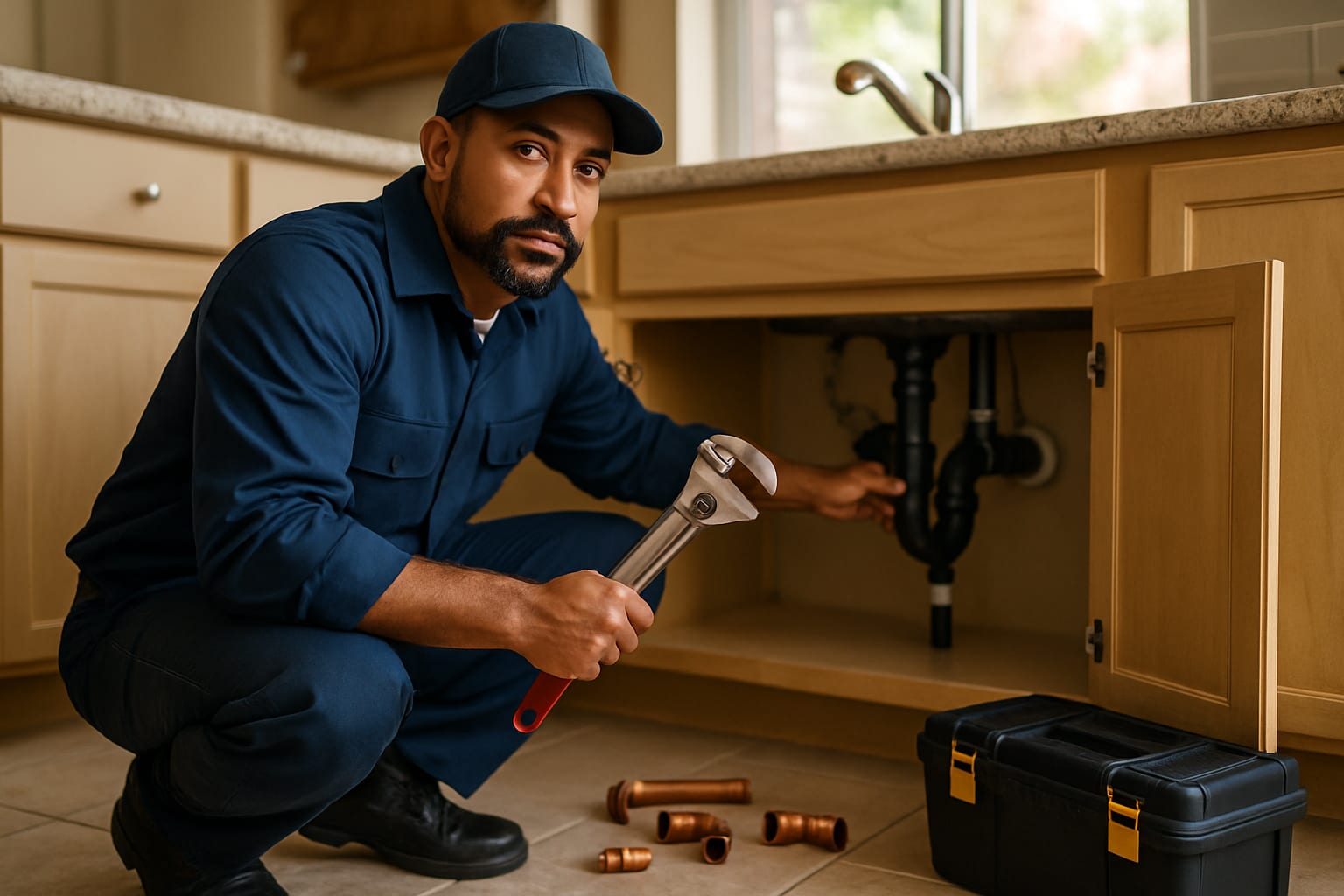
A licensed plumbing operation in Houston is the subject of this case example. Six technicians, two dispatcher trucks, residential and commercial emergency calls across Harris County. His Google Business Profile had been a steady source of inbound calls.
Then it went offline.
He called us after three denied appeals, not after the first one. Two agencies had each taken his money and produced nothing, and the owner described the cost as severe. Each week offline meant missed dispatch calls.
On the first call, the owner had been told after the third denial that the listing was permanently suspended and that a new listing was the only option.
That is often not the end of the road.
What Had Been Tried Before We Got Involved
The owner’s first appeal — submitted by his office manager three days after the suspension — included a business licence, a photo of the company van, and a screenshot of the company website. Denied in four days.
His second appeal — submitted by Agency #1, which he found through a Google search — added a utility bill and a signed letter from the owner asserting that the business was legitimate. Denied in six days.
His third appeal — submitted by Agency #2 — added photos of technicians at a job site, a Texas Master Plumber licence, and additional photos of branded equipment. Denied.
At that point, the owner had been offline through three denials, had paid two agencies, and was sitting on three denial letters that all said essentially the same thing: “We were unable to verify that this business meets our eligibility requirements.”
The Document Audit: Finding What Three Appeals Had Missed
The first thing we do on any multi-denial case is a structured document audit. We do not start by writing a new appeal. We start by reading every document that was previously submitted and comparing every address field across every record.
This audit is the most important step in a case with multiple denials, and it is the step that the previous two agencies had apparently skipped.
What the audit found:
The owner’s Google Business Profile listed his business address as:
[street address], Suite 204, Houston, TX
His Texas Secretary of State business filing — the official state record Google’s reviewers cross-reference — listed his address as:
[street address], Suite 240, Houston, TX
Suite 204. Suite 240.
That was it. Two transposed digits in a suite number.
Every single appeal — all three, from the owner’s own office manager and from two separate agencies — had been submitted with the GBP address. None of them had checked the state filing.
Google’s automated verification system had been comparing the submitted address against the state record and finding a mismatch on every single attempt. The appeals were sophisticated, well-documented, and completely irrelevant to the actual problem.
Why This Happens Constantly
The suite number discrepancy is the most common version of a broader pattern we call the address consistency failure. It often has the same origin story.
When a business first registers its address with the state, the person filling out the form — often the owner, often late at night, often without much thought given to the exact format — enters something slightly different from what ends up on the physical address. A suite number gets transposed. “Street” becomes “St.” or “Str.” One address says “NW” and another says “Northwest.” The zip code has a plus-four extension on one record and not another.
None of this matters for day-to-day business. The mail arrives. The taxman finds you. The lease is clear.
It only matters when Google’s verification system tries to confirm your existence by cross-referencing multiple official records — and finds that they do not match each other perfectly.
The owner’s suite number had been wrong on his state filing for at least four years. He had never noticed because it had never mattered before. The lease said 204. The GBP said 204. The state filing — which he had not looked at since incorporation — said 240.
The two previous agencies had never checked the state filing. They had checked the GBP, the utility bill, the lease, and the business licence — all of which said 204 — and assumed the submission was correct.
The Fix
Step We identified the discrepancy. We verified it against the Texas Secretary of State’s SOSDirect portal. The filing clearly showed Suite 240.
We had a conversation with the owner about which address was actually correct. The physical suite at [street address] was Suite 204 — confirmed by the building directory, the lease, and the utility bills. The state filing was wrong.
The correct action was therefore to update the Texas Secretary of State filing to reflect Suite 204, then rebuild the appeal submission using the corrected address consistently across all documents.
Step The owner submitted an address correction through the Texas Secretary of State (SOS) SOSDirect portal. This is a standard state filing. The Texas SOS processes registered agent and address updates within 2-5 business days. That window is the state’s processing time, not a GBP Fixers timeline.
While waiting for the state filing to update, we prepared the appeal package. The package itself was similar to prior appeals — business licence, utility bill, lease, photos, Texas Master Plumber licence — but every address field was now consistent, and we reformatted every document so the suite number appeared identically across all of them.
Step Texas Secretary of State public records reflected the corrected address. We pulled a fresh printout from SOSDirect to include as a document in the appeal.
Step Appeal submitted.
Step Google reinstated the listing. Review history intact. Business information verified and confirmed clean.
While the Listing Was Offline
This case is worth being specific about the business consequences, because the numbers illustrate something important about why speed matters in GBP recovery.
Before the suspension, the owner’s plumbing operation was getting a steady stream of inbound calls through Google Maps. Each week offline meant missed dispatch calls.
While the listing was not visible, some of that call volume shifted to other sources. Some was absorbed by competitors. Some was simply lost. The owner described the cost as severe.
The address mismatch — two transposed digits — went uncaught for weeks.
The state filing was a small document order, separate from the appeal. The owner described the missed dispatch calls as severe. Google decides timing — this case is one example, not a guaranteed timeline.
The reason this case ran as long as it did is not that it was a difficult problem. It is that the right question was never asked: Does every address record match?
The Rule for Any Business That Has Had an Appeal Denied
If you have submitted a GBP reinstatement appeal and been denied — once, twice, or five times — the first question before submitting again should be:
Does every address on every document match the address on the Google Business Profile submission, character for character?
Check:
- State business registration (Secretary of State, DBA filing, LLC operating agreement)
- County business licence or occupation tax certificate
- Commercial lease
- Utility bills (electric, gas, water — whichever you are submitting)
- Vehicle registrations (for service area businesses with fleet vehicles)
- Business bank account records
- Website contact page and footer
Any discrepancy — even abbreviations, directional prefixes, or suite number formatting — needs to be resolved before the next appeal. Submit only after all records are consistent.
This audit is quick. It is the most valuable step in any GBP recovery process.
What Plumbing Businesses Should Know About GBP Suspensions
Plumbing is a high-scrutiny GBP category alongside locksmiths, HVAC, pest control, and electricians. The reason is identical: all of these categories have historically been exploited by fraudulent lead generation operations that created fake listings to capture emergency service calls.
Google’s automated systems treat these categories with heightened scrutiny. In our cases, SAB plumbing edits to service area, phone or address often triggered review.
If you run a plumbing business with an active GBP, the most important preventive steps are:
Keep your registered address consistent. Every official record that could be used to verify your business should show the same address in the same format. Review your state filing annually.
Do not edit your GBP from multiple devices or accounts. Plumbing businesses with multiple staff members sometimes have different people logging into the GBP from different devices. Each login from a new device adds a flag to the account.
Respond to all reviews, including negative ones. An active, engaged GBP signals authenticity to Google’s quality filters. Listings that go weeks without any engagement may be flagged during automated sweeps.
Get your Texas Master Plumber licence number into the GBP. Adding your licence number to your business description or as a service attribute provides an additional verification anchor that Google’s reviewers can independently confirm.
Timeline Summary
| Step | Action |
|---|---|
| — | Case assessment. Document audit reveals suite number discrepancy. |
| — | Texas SOS address correction filed online. Appeal package prepared. |
| — | SOS record updated and confirmed. Fresh SOSDirect printout obtained. |
| — | Corrected appeal submitted with consistent address across all documents. |
| — | Google reinstated the listing. Review history intact. |
Google decides timing — this case is one example, not a guaranteed timeline.
This case was handled by the GBP Fixers recovery team. Client details have been anonymised. The recovery workflow described reflects the process in this file for multi-denial SAB suspension cases involving address record inconsistencies.
Case Classification
Problem type: Reinstatement Denied Repeatedly — Address Record Inconsistency (SAB)
Suspension classification: Hard Suspension — Service Area Business
Timing: Google decides timing — this case is one example, not a guaranteed timeline.
One case example. Google decides timing; not a guaranteed timeline.
Related Intelligence
This case illustrates patterns documented in two GBP Fixers intelligence reports:
- GBP Appeal Rejection Patterns 2026 — why reinstatements are denied, what documentation gaps cause repeated rejections, and what successful appeals contain
- GBP Suspension Patterns 2026 — address-related suspension triggers and why matching address records mattered in repeated denials
We do not publish outcome rates.
Related Cases
Similar reinstatement cases handled by GBP Fixers:
- Pest Control: Reinstatement Denied — Orlando, FL
- HVAC: Suspension + Video Verification — Phoenix, AZ
- Electrician: Hard Suspension Recovery — Las Vegas, NV
Browse related suspension patterns and recovery observations — including why matching address records mattered in this file — in the GBP Fixers Intelligence Hub.
Facing a similar situation? GBP Fixers prepares appeals for suspended and suppressed Google Business Profiles for businesses across the USA and UK. We’ve managed hundreds of cases since 2024, including repeat denials, video verification holds, and ownership disputes. Request your free case assessment. We’ll review your case and reply as soon as possible. If you’ve already been denied, our reinstatement service prepares a corrected submission for previously rejected appeals.
Frequently Asked Questions
Why does an address mismatch cause a GBP reinstatement appeal to be denied? +
What address records does Google check during a GBP reinstatement review? +
Can I fix an address discrepancy while my GBP is already suspended? +
How long does it take to correct a Texas Secretary of State business filing? +
Is it possible to recover a GBP that has been denied three or more times? +
More Recovery Case Examples
How a Duplicate GBP Listing Killed a Chicago Dental Practice's Local Visibility — and How the Primary Listing Was Restored
Flooring Company · Indianapolis, INThe Flooring Company Trapped in a Video Verification Loop After Moving Its Address to a Storage Unit
Restaurant · Miami, FLCompetitor Fake Review Attack Suppressed a Miami Restaurant's GBP — How the Reviews Were Reported
Pushpender Sodlan
Google Ads Partner (not GBP access) · GBP Recovery Specialist · Founder, GBP Fixers
Pushpender has personally led the management of many suspended Google Business Profile cases for businesses across the USA, UK, and Canada. As a certified Google Ads Partner (not GBP access), he works with business owners to prepare guideline-aligned appeals. Google decides whether a listing returns. The workflows documented in this case example reflect his team's process.
LinkedIn · About.me · Connectively · About the author · All case examples