
Case Example: Pest Control GBP Reinstatement Denied — Orlando, FL
Outcome
Listing reinstated. Review history intact. Google decides the outcome. Google decides timing — this case is one example, not a guaranteed timeline
Case history
Google decides timing — this case is one example, not a guaranteed timeline

Pushpender Sodlan
Google Ads Partner (not GBP access)
GBP Recovery Specialist · Hundreds of cases managed
Case examples are anonymized and may combine details from similar cases. Names, numbers and identifying details are changed. They show our process, not a promised result; Google decides every outcome.
Case Summary
An Orlando pest control operator had their Google Business Profile suspended and then received a formal reinstatement denial. GBP Fixers audited the original appeal, identified the old-address citations and missing license details, and resubmitted on Google's official form with new evidence. Google reinstated the listing. Review history intact.
Key Takeaways
- ✓ A reinstatement denial is not final — a second appeal with complete state licensing documentation is a stronger file. Google decides.
- ✓ Pest control businesses are high-scrutiny on GBP because the industry attracts fraudulent listings; your appeal must proactively prove legitimacy, not just respond to the denial reason given.
- ✓ Google frequently denies reinstatements due to address verification gaps — service-area businesses in pest control must clearly define and document their coverage zone, not just a home-office pin.
- ✓ After a denial, resubmit on Google's official form with materially new evidence.
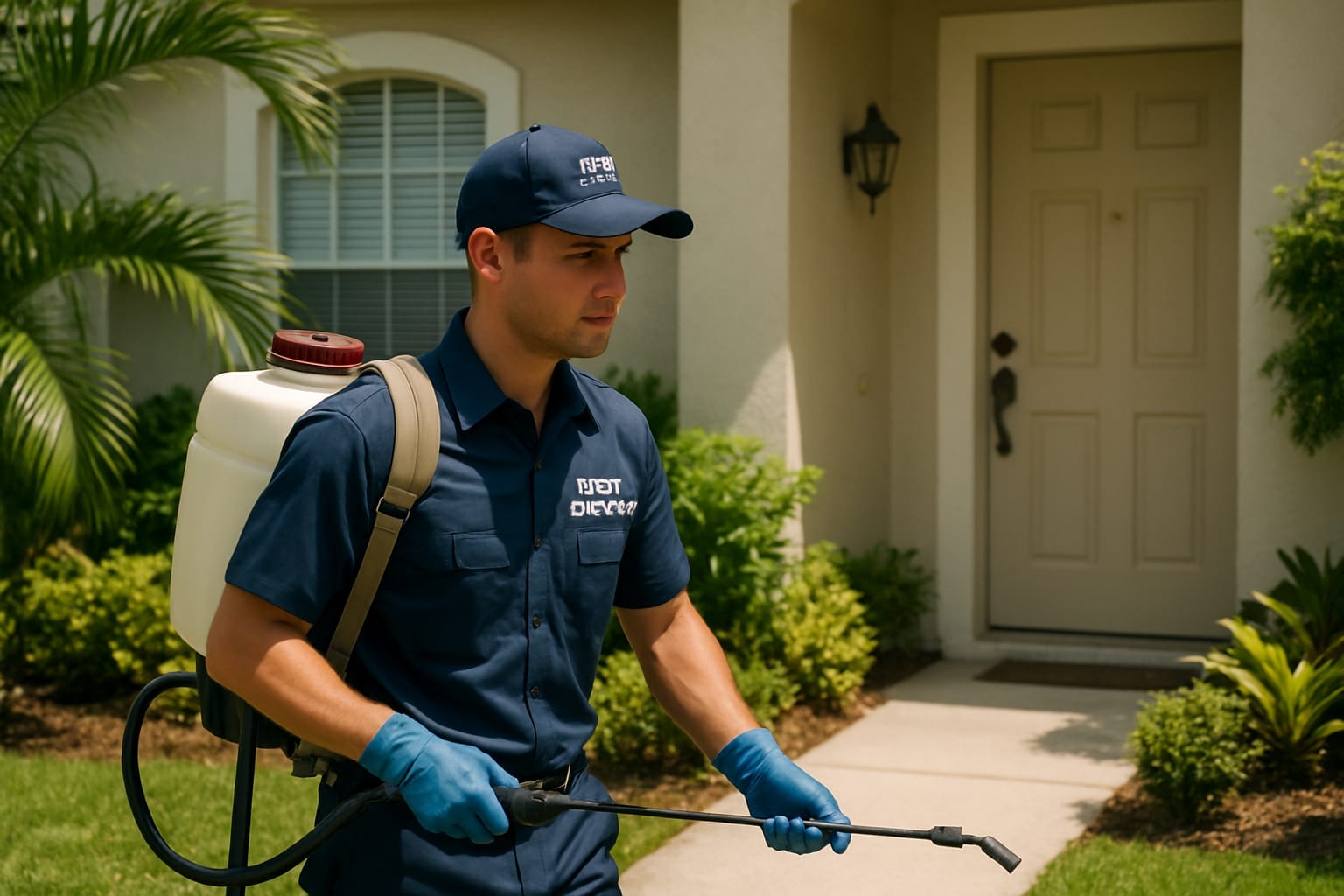
A pest control company in Orlando is the subject of this case example. Forty-one employees, a fleet of branded trucks, and a Google Business Profile with its review history intact. That profile drove many of his leads — calls from homeowners dealing with termite damage, rodent problems, and the particular Central Florida ant species that makes life miserable for anyone near a wooded lot.
Then the profile disappeared. Not suppressed, not filtered — suspended. And when the owner filed a reinstatement request through Google’s standard form, he got a denial. No explanation. Just a rejection, and a support page that told him nothing useful. Google decides timing.
He found us after trying to fix it himself. By that point, trackable call volume had already dropped. The busiest part of Florida’s pest season was running, and his competitors were picking up jobs he was missing. This case is documented in full as part of our other case examples. Google decides timing — this case is one example, not a guaranteed timeline.
Why the Reinstatement Denial Happened
Pest control is one of the most consistently flagged categories in Google’s local search ecosystem. We see this pattern with pest control businesses constantly — and the reasons are structural, not accidental.
The category attracts a high volume of spam listings, which Google’s policies on fake or misleading profiles are meant to catch: unlicensed operators, lead generation sites posing as service businesses, and duplicate listings created by franchise systems where individual technicians try to build their own visibility. Google’s automated systems treat the whole category with elevated suspicion, and legitimate businesses get caught in that net regularly.
In the owner’s case, the suspension was triggered by an address flag. His company had relocated its office fourteen months earlier — from a commercial suite near downtown Orlando to a larger facility on the outskirts of the city. The new address had been updated in the GBP dashboard, but the original address still appeared on two other platforms (Yelp and a regional directory site) and was still listed on an older version of the company website that Google had cached. When Google’s verification system cross-referenced his profile against those signals, it found conflicting location data and flagged the account.
The denial on the first reinstatement attempt happened because the owner submitted the appeal without any supporting documentation. He just filled out the form and clicked submit. Google’s reviewer had no way to distinguish his legitimate business from the noise in this category, so the system defaulted to denial.
Our Assessment
When the owner’s call came in, the first thing we did was pull a full citation audit across the top 40 directories indexed for his business name. That’s not optional in cases like this — it’s where the real problem usually lives.
We found six locations where the old address was still active. Two of them had significant domain authority, which meant Google was seeing those as credible conflicting signals rather than minor inconsistencies. The GBP listing itself was also missing three compliance elements we look for in regulated service businesses: no state pest control operator license number in the profile, no defined service area boundaries, and a primary category that had drifted from “Pest Control Service” to “Exterminator” at some point during an automated Google update.
The combination — conflicting address data at scale, missing regulatory identifiers, and a category that Google already monitors heavily — was enough to explain both the suspension and the denial. Fixing only one of these and resubmitting was likely to be rejected.
We took the case. The plan was to resolve the citation conflicts first, then build an appeal package strong enough that a human reviewer could approve it with confidence.
The Recovery Process
The citation cleanup came first, and it took longer than we wanted. Several of the directory platforms have manual correction processes that take time, and two of them required the owner to verify ownership through a phone call to the listed number — which was his old office line, now disconnected. We worked through the ownership verification using business registration documents and got both corrected.
The appeal package itself was built around five document types. First, a signed commercial lease agreement for the current address, dated from the move, showing the full legal business name matching the GBP profile. Second, a current Florida Department of Agriculture and Consumer Services pest control business license — the state-issued document that registers operators in Florida — with the address and license number clearly visible. Third, three months of utility bills for the current location. Fourth, a screenshot audit showing the old address corrections across all major platforms, with timestamps. Fifth, a written statement from the owner explaining the relocation timeline, referencing the specific dates and the reason for the address discrepancy on third-party sites.
We also added the state license number directly to the business description in the profile before resubmitting. Regulated industries have a meaningful edge in appeals when you can point to verifiable credentials — it establishes that a real, accountable business exists behind the listing.
The corrected appeal was submitted on Google’s official reinstatement form. A prior denial does not open a Help Community escalation path or a human-reviewer shortcut. Resubmitting the same file rarely changes the outcome; changing the evidence does. Google decides whether that second file is accepted.
What we did
Step — Initial intake call with the owner. Pulled the full citation audit and identified six conflicting address listings. Confirmed the denial was based on location verification failure, not policy violation.
Step — Started citation correction requests across all six platforms. Pulled all documents from the owner: lease, FDACS license, utility bills.
Step — Citation corrections processing. Two platforms required ownership verification calls. We coordinated those with the owner and got both resolved.
Step — Confirmed four of six citations were updated. Two major directories still pending.
Step — Both remaining directories confirmed. Ran a second cross-platform check to verify no other conflicting signals remained active.
Step — Built the full appeal package. Reviewed every document for name/address consistency. Added license number to the profile description. Wrote the explanatory statement with the owner.
Step — Resubmitted on Google’s official form with the complete evidence package.
Step — Monitoring period. No response from Google. This is normal and one of the harder parts of the process — there is nothing to do but wait, and the owner was checking in every day. We kept him updated on what we were watching for.
Step — Google reviewer responded requesting one additional item: a photo of the business exterior showing signage at the current address. We had the owner photograph the building entrance with the company name visible.
Step — Submitted the exterior photo through the reviewer thread.
Step — Google reinstated the profile. Review history intact. Google decides when map visibility returns.
When the listing returned, the review history was intact. Years of customer relationships had been sitting on a suspended account.
The Business Impact
Before the suspension, his Google Maps listing had been a steady source of inbound calls. While the listing was offline, that channel went quiet. Every day offline meant missed calls. The owner described the cost as severe. Google decides timing — this case is one example, not a guaranteed timeline.
The calls didn’t disappear entirely. Some went to his website directly, some to competitors. But Google Maps was his primary new-customer channel, and that channel was simply gone.
What Pest Control Businesses Should Know
Your address history is a liability if you don’t manage it. Any time you move locations, do a full citation audit at once — not six months later. Old addresses on directory sites are a common suspension trigger in service-area businesses, and pest control operators move or expand service areas frequently.
Your state license is a verification asset. Florida requires pest control businesses to hold an FDACS-issued license. That license number, visible in your GBP profile and included in any appeal documentation, at once distinguishes your business from unlicensed operators. If it’s not in your profile right now, add it today.
A denial is not final. After a denial, resubmit on Google’s official form with materially new evidence. Getting denied once doesn’t mean the profile is gone — it means the first attempt wasn’t sufficient.
Don’t wait. The longer a suspension runs, the more customers find permanent alternatives. If your profile is suspended and a self-service attempt has already failed, request a free case review before trying again.
Timeline Summary
| Step | Action |
|---|---|
| — | Case intake. Citation audit completed. Six conflicting address listings identified. |
| — | Citation corrections initiated. Documents collected from client. |
| — | Citation corrections processing. Ownership verification completed for two platforms. |
| — | Four of six citations confirmed updated. |
| — | All citations resolved. Clean cross-platform audit confirmed. |
| — | Appeal package built. License number added to profile. Explanatory statement drafted. |
| — | Appeal resubmitted on Google’s official form with materially new evidence. |
| — | Waiting period. Regular status updates to client. |
| — | Google reviewer requested exterior photo of current business location. |
| — | Exterior photo submitted. |
| — | Google reinstated the profile. Review history intact. Google decides when map visibility returns. |
Case Classification
Problem type: Reinstatement Denied — Citation Address Conflict + Undocumented Business Relocation
Suspension classification: Hard Suspension — Service Area Business
Timing: Google decides timing — this case is one example, not a guaranteed timeline.
One case example. Google decides timing; not a guaranteed timeline.
Related Intelligence
This case illustrates patterns documented in two GBP Fixers intelligence reports:
- GBP Appeal Rejection Patterns 2026 — why first-attempt appeals fail, and what reviewers require for regulated service businesses
- GBP Suspension Patterns 2026 — how address inconsistencies across citations trigger automated suspensions in high-scrutiny categories
We do not publish outcome rates.
Related Cases
Similar reinstatement cases handled by GBP Fixers:
- Plumber: Three Reinstatement Denials — Houston, TX
- HVAC: Suspension + Video Verification — Phoenix, AZ
- Electrician: Hard Suspension Recovery — Las Vegas, NV
This case was handled by the GBP Fixers recovery team. Client details have been anonymised.
Frequently Asked Questions
Can a denied Google Business Profile reinstatement for a pest control company be appealed again? +
Why would Google deny a reinstatement for a legitimate pest control business in Orlando? +
How long does it take to reinstate a pest control GBP listing after a denied appeal? +
Will my Google reviews be lost if my pest control listing was suspended and denied reinstatement? +
What documentation does a pest control business attach to a GBP appeal in Florida? +
More Recovery Case Examples
Accounting Firm GBP Suspension After a Virtual Office Move — Columbus, OH
Real Estate Agent · Nashville, TNFormer Partner Filed an Ownership Claim on a Nashville Realtor GBP
Roofing · Dallas, TXHow One Category Change Collapsed a Roofing Contractor's Google Rankings — and Triggered a Suspension — Dallas, TX
Pushpender Sodlan
Google Ads Partner (not GBP access)
GBP Recovery Specialist · Founder, GBP Fixers
Pushpender has personally led the management of many suspended Google Business Profile cases. He works with business owners to prepare guideline-aligned appeals. Google decides whether a listing returns. The workflows documented in this case example reflect his team's process.
LinkedIn · Connectively · About the author · All case examples