
Nashville HVAC Contractor's GBP Suspended After a Single Failed Video Verification — How We Got a 6-Year-Old Listing Back in 18 Days
Outcome
Reinstated in 18 days from GBP Fixers engagement
Recovery Time
18 days

Pushpender Sodlan
Google Partner · GBP Recovery Specialist · 500+ Profiles Recovered
Case Summary
A Nashville HVAC contractor updated his service area to include a new county. This triggered a video reverification request. He recorded a clean video at his work van, submitted it, and his listing went offline two days later without explanation. The problem wasn't the video quality — it was that the listing had no supporting documentation establishing it as a legitimate service-area business, and when the video alone couldn't establish credibility for his residential SAB, the reviewer had nothing else to anchor an approval on. We rebuilt the documentation package, coached a second video, submitted through the right channel, and had him reinstated in 18 days.
Key Takeaways
- ✓ A video verification request is not a routine administrative step for SABs — it is a trust review, and the video alone is rarely enough to pass it without supporting documentation
- ✓ Service area updates on SAB listings in HVAC, plumbing, locksmith, and roofing categories frequently trigger reverification requests — the category risk, not the content of the change, is what flags the listing
- ✓ When a listing disappears after a video verification attempt without a formal suspension notice, it is almost always a verification-to-suspension cascade — not a separate suspension event
- ✓ SAB reverification videos recorded in a residential setting need specific structural elements to establish credibility with reviewers who are evaluating against a storefront model
- ✓ A DIY appeal after a video verification failure often creates a denial record that makes the professional recovery harder — stopping and assessing is almost always better than filing immediately
- ✓ Documentation that explains the SAB operating model explicitly — what the business is, how it operates, where it's registered — outperforms documentation that just shows business existence
Marcus had been running his HVAC operation out of the greater Nashville area for six years. Residential and commercial service calls, a crew of four, and a Google Business Profile that had quietly generated 40 to 60 calls per week without requiring much attention. Five stars on Google. Dozens of reviews from real customers.
He made one routine change. He updated his service area to include Cheatham County — a market he’d been servicing informally for months and wanted to cover officially in his GBP.
Eleven days later, his listing was gone.
“I didn’t even know what reverification was,” he told us on the first call. “I thought Google sent me a video request and I did the video. Then the listing disappeared. I had no idea those two things were connected.”
What Happened Between the Service Area Update and the Suspension
The chain of events was straightforward, but none of it was visible to Marcus in real time.
When he updated his service area, Google’s systems flagged the change on his HVAC listing for review. HVAC is a high-scrutiny category — the category is associated with fraud listing activity, and service area changes in these categories trigger reverification requests at a meaningfully higher rate than the same change in a lower-risk category. The content of the change (adding one county) didn’t matter. The category context did.
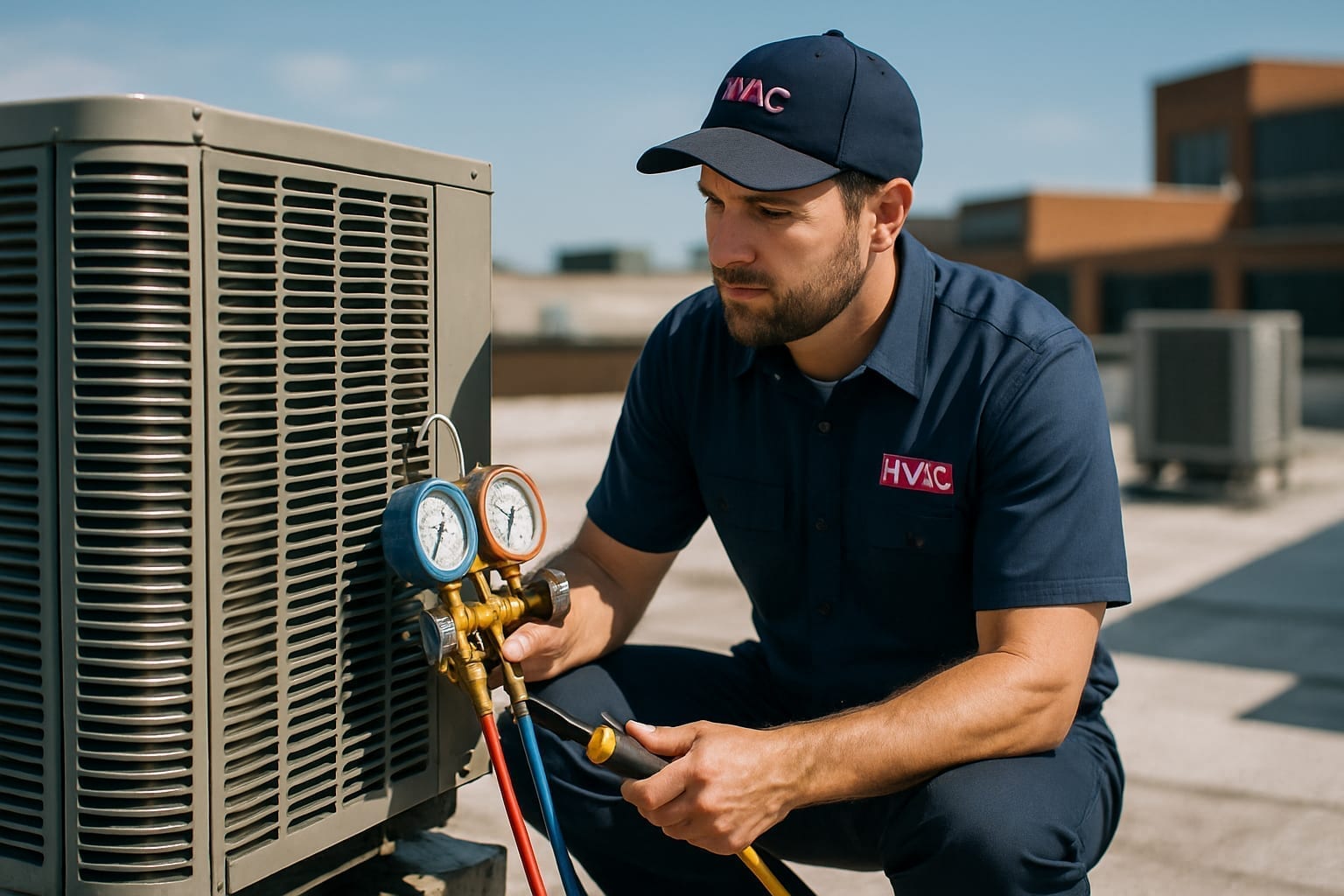
Two days after the update, Marcus received an email from Google asking him to verify his business via video. He read the instructions, drove out to where his work van was parked in his residential driveway, and recorded a two-minute walkthrough: the van with his company name and phone number, the truck bed with equipment and tools, his HVAC gauges and service kit, and a brief verbal explanation of what the business did.
He submitted the video and waited.
Four days later, his listing disappeared from Google Maps.
No suspension email. No formal notice. The listing simply stopped appearing in search results and in his Google Business Profile dashboard it showed as “Under review” — then, a day later, showed nothing at all.
He spent three days trying to understand what had happened before concluding that the video must have failed. He filed a reinstatement appeal through Google’s standard support form, explaining that he was a legitimate HVAC contractor who had been in business for six years, attached his HVAC technician certification and a screenshot of his website, and asked for his listing to be restored.
Denied in four days. The letter said the business could not be verified as meeting Google’s eligibility requirements.
He contacted us on day 15 from when his listing had gone offline.
The Assessment: What the Video Couldn’t Establish
The first thing we do on any video verification case is attempt to understand exactly what the reviewer saw — or didn’t see — in the original submission.
Marcus described his video clearly: the van exterior, the equipment, his work materials, a verbal walkthrough. He had recorded exactly what most people picture when they imagine a “show Google your business” video.
What the video didn’t show, and what a reviewer evaluating a residential SAB in an HVAC category would specifically be looking for, was any of the following:
Proof of registration. No licensing paperwork, contractor’s license, business registration documents, or official credentials were visible anywhere in the video or submitted alongside it. The reviewer saw equipment in a driveway. They had nothing to establish that this was a licensed, registered contractor business rather than a private individual with HVAC tools.
A name-to-business connection. Marcus didn’t appear on camera with identification. The van had a business name but no connection was drawn between the owner’s identity, the business registration, and the listing. For a storefront business with a shop and signage, this connection is usually obvious. For a residential SAB with a vehicle, it needs to be made explicitly.
SAB context. Nothing in the video submission explained what a service-area business was or why there was no customer-facing premises to show. A reviewer who doesn’t understand the SAB model — or who is using automated scoring — has no framework for evaluating what they’re looking at.
Marcus had submitted a video that showed he had HVAC equipment. He hadn’t submitted anything that showed he was a real, licensed, registered business operating that equipment in a legitimate service-area operation.
The gap wasn’t in the video quality. It was in everything surrounding the video.
The Documentation Rebuild
Before touching the appeal or the video, we built the documentation package that should have gone in with the original verification attempt.
Tennessee contractor license. Marcus held an active HVAC contractor’s license issued by the Tennessee Department of Commerce and Insurance. This is the single most important piece of documentation for his category — it establishes that he has passed licensing requirements to operate as a contractor, and it connects his legal identity to the business activity. This had not been included in the original video or the DIY appeal.
Business registration. Marcus’s business was registered as an LLC in Tennessee. We pulled a current Tennessee Secretary of State filing showing the business name, registered address, and registered agent. The name on the registration matched the GBP listing exactly. The address was Marcus’s residential address — and we noted this directly in the appeal narrative, explaining that the registered address was his home and that as a service-area business he operated from that address without a customer-facing premises.
Utility bill. A current utility bill in Marcus’s name at the registered address. This establishes that the registered address is a real, occupied location.
Insurance documentation. A commercial general liability insurance certificate naming the business, Marcus as the insured, and listing the HVAC contractor classification. Insurance documentation is an underused but strong trust signal for trades businesses — it shows that a real insurance underwriter has assessed the business and extended commercial coverage.
Service records. Three recent customer invoices — with customer names, service addresses, and Marcus’s business details — showing recent HVAC service calls in the Nashville area. These established that the business had active customers and a real service history.
Vehicle registration. The commercial vehicle registration for the work van, showing the vehicle was registered to the business rather than personally.
None of these documents were complicated to obtain. All of them existed. Together, they told a coherent story: here is a licensed HVAC contractor, registered in Tennessee, operating from this residential address as a service-area business, actively serving customers in the greater Nashville area.
The Second Video
For the second video submission, we coached Marcus through a structured approach designed specifically for a residential SAB in a trades category.
The video needed to do several things that the first video hadn’t done:
Establish identity first. Marcus appears on camera at the start of the video and holds his Tennessee contractor license clearly visible to camera, reads his name and license number aloud, and states the business name.
Show the documentation connection. He briefly shows the business name on the van, then holds the LLC registration document next to the business name visible on the vehicle. This creates a visual, on-camera connection between the registered business entity and the vehicle used for operations.
Show operational context. Service call paperwork from the most recent job — customer address, job description, Marcus’s business contact details — visible on camera alongside the tools and equipment. This frames the HVAC equipment as part of an active service operation rather than personal possession.
Explain the SAB structure directly. Marcus looks at camera and states: “This is a service-area business. We operate from this address and travel to customer locations throughout Davidson, Williamson, Rutherford, and Cheatham counties. We do not have a customer-facing storefront.”
This last point is one that most SAB business owners are instinctively reluctant to do — they worry that explaining they don’t have a shop will hurt rather than help. In our experience, the opposite is true. A reviewer who understands what they’re looking at can assess it accurately. A reviewer who is evaluating a residential driveway against a storefront mental model without any explanatory context is more likely to flag it.
The Appeal and Resolution
With the documentation package assembled and the second video recorded, we submitted the appeal through the appropriate channel for a video verification failure on an SAB listing.
The appeal narrative was approximately 400 words. It described the business, the operating model, the service area, the licensing, and the reason for the address configuration. It did not apologize for the residential address. It explained it.
The documentation package included every item listed above. Every address field across every document was consistent.
On day 18 from our engagement — day 33 from the original suspension — the listing was reinstated. All 127 Google reviews were intact. Marcus’s Maps presence was restored with the expanded service area covering all four counties including Cheatham.
What Marcus Changed After Reinstatement
The experience changed how Marcus maintains his GBP profile.
He now keeps a “suspension kit” — a folder with current copies of his contractor license, LLC registration, utility bill, insurance certificate, and three recent customer invoices — that he updates quarterly. If a reverification request arrives, he doesn’t have to hunt for documents. He has them ready.
He also now understands that service area changes on an HVAC listing in a competitive market are not routine edits. Before making any significant listing change, he pauses for a moment and considers whether the change is necessary at that moment, or whether it can wait until a period when the listing isn’t otherwise active with recent reviews or search activity.
This isn’t a burden. It’s a 20-second decision that he now makes automatically.
“I lost 33 days of HVAC calls in late spring,” he said when we closed the case. “In Nashville, late spring is when the AC calls start coming in. I can tell you exactly what those 33 days cost. I’d rather have a folder and not need it than need it and spend another month rebuilding from zero.”
What This Case Illustrates About SAB Video Verification
The Nashville HVAC case is representative of a pattern we see frequently — a competent, legitimate SAB business owner who films an accurate, honest video, submits it in good faith, and loses their listing because the video alone wasn’t enough to establish credibility for a reviewer evaluating a residential SAB in a high-scrutiny category.
The video is never really the problem. The problem is the absence of a supporting documentation structure that explains what the reviewer is looking at and provides the documentary evidence that a physical storefront would implicitly provide through its existence.
For a full analysis of the structural reasons service-area businesses are suspended at higher rates and through different mechanisms than storefront businesses, see our SAB GBP Suspension Patterns 2026 report. For the specific patterns behind video verification failures across all business types, see our GBP verification failure patterns report.
If you are an HVAC, plumbing, electrical, or other trades business facing a video verification request or a listing suspension triggered by a reverification attempt, our video verification service is specifically designed for this case type. We assess your documentation situation, coach the video approach, and handle the appeal — including through escalation channels if a standard submission has already been tried and denied.
Start with a free audit and we’ll tell you exactly where your case stands.
"
Six years of five-star reviews and I disappear from Google because of a service area update. The worst part is I did the video perfectly. Nobody told me the problem wasn't the video — it was everything around it. GBP Fixers found it in the first hour.
— Marcus W., Owner — Nashville HVAC Contractor
Frequently Asked Questions
Can a service area update cause my GBP listing to be suspended? +
Why did my GBP listing disappear after I did the video verification? +
What makes a video verification fail for an HVAC or other SAB business? +
Can I file an appeal after a failed video verification? +
How long does it take to recover a GBP suspended after a video verification failure? +
More Recovery Case Studies
The Vet Clinic That Vanished From Google Maps Overnight — Without a Suspension
Locksmith · London, UKLocksmith GBP Suspension Recovery — London, UK
Dentist · Chicago, ILHow a Duplicate GBP Listing Killed a Chicago Dental Practice's Local Visibility — and How We Fixed It in 9 Days
Pushpender Sodlan
Google Partner · GBP Recovery Specialist · Founder, GBP Fixers
Pushpender has personally led the recovery of 500+ suspended Google Business Profiles for businesses across the USA, UK, and Canada. As a certified Google Partner and specialist in GBP suspension reinstatement, he works with business owners every day to navigate Google's policies and get listings back online fast. The workflows documented in this case study reflect his team's actual recovery process.