
Case Example: The Flooring Company Trapped in a Video Verification Loop After Moving Its Address to a Storage Unit
Outcome
Listing reinstated. Review history intact. Google decides the outcome. Google decides timing — this case is one example, not a guaranteed timeline
Case history
Google decides timing — this case is one example, not a guaranteed timeline

Pushpender Sodlan
Google Ads Partner (not GBP access)
GBP Recovery Specialist · Hundreds of cases managed
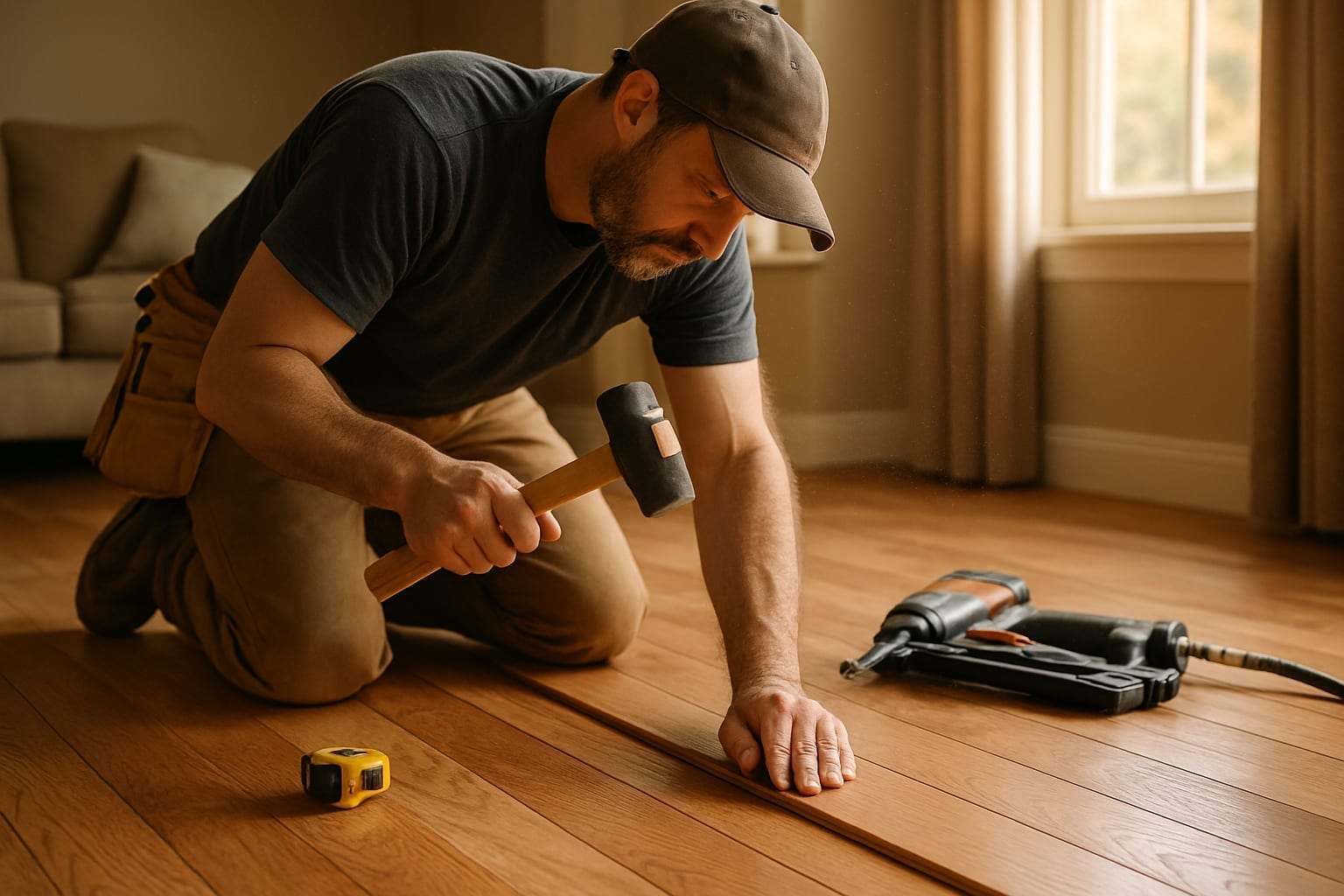
Case examples are anonymized and may combine details from similar cases. Names, numbers and identifying details are changed. They show our process, not a promised result; Google decides every outcome.
Case Summary
An Indianapolis flooring company was suspended after changing its Google Business Profile address to a storage unit — an unstaffed address that doesn't meet Google's guidelines. Two self-made video verification attempts failed because the footage never connected the owner, the business name, and a legitimate work location in one continuous shot. GBP Fixers reverted the profile to a compliant service-area setup, built an evidence file, and scripted the video. Google passed verification on a later attempt. Google decides timing.
Key Takeaways
- ✓ Google's guidelines name PO boxes and virtual offices; a storage unit used only for stock isn't a staffed place where you meet customers, so don't list it as the address.
- ✓ Video verification must be one continuous, uncut recording that connects three things: where you operate, proof of business operations, and proof that you are authorised to represent the business
- ✓ Failed attempts are not free — each rejection makes the next review stricter, so resubmitting the same style of video is the worst possible move
- ✓ Home-based flooring businesses should verify from the registered home address with license, insurance, branded materials, and tools — not from a storage unit they rent under a personal name
The owner runs a residential flooring company on the south side of Indianapolis — hardwood, LVP, and tile installation, nine years in business, with years of review history. Like most flooring installers, he has no showroom. He quotes in customers’ living rooms, keeps inventory wherever he can, and for nine years his Google Business Profile quietly delivered his quote requests: a steady stream of quote requests in a normal week.
In late May he made a change that felt like an upgrade. He’d rented a larger storage unit for slab stock and tools, and it seemed more professional than his home address, so he updated his Business Profile address to the storage facility. Soon after the edit, the profile was suspended. The email cited “quality issues” — Google’s standard, unhelpful phrasing — and when he appealed, Google responded with a request for video verification.
He tried twice on his own. The first video toured the storage unit: rolls of underlayment, boxes of LVP, his tools. Rejected. The second added him talking to the camera and holding up a business card. Rejected again, this time with a longer wait for the answer. Five weeks after the suspension, with his phone nearly silent through the start of summer renovation season, he called us convinced the listing was unrecoverable.
Why the Suspension Happened
The suspension itself was the easy part to explain. Google’s guidelines name virtual offices and P.O. boxes. A storage unit used only for stock is the same problem: it is not a staffed place where you meet customers. Google requires either a staffed location customers can visit or a service-area business anchored to a genuine operating address. An unstaffed unit in a self-storage corridor is neither — and to Google’s filters, a business suddenly relocating to one looks like the address manipulation spammers use to plant listings in better map positions.
In the video verification cases we handle, this pattern is one of the most common: a legitimate service-area business owner makes an innocent address change, trips an automated eligibility check, and lands in verification without understanding what triggered it. Flooring companies are especially exposed because the trade genuinely revolves around stored inventory. The storage unit really is where the business keeps its stock — it just can’t be where the business lives on Google.
The failed videos were the more instructive problem. Both attempts made the same mistake, and it’s a mistake we often see in self-made verification videos: they showed things without proving connection. A unit full of flooring materials proves flooring materials exist. It doesn’t prove they belong to a business called by his company’s name, operating from the address on the profile, controlled by the person holding the camera. His rental agreement was in his personal name. There was no signage, no branded vehicle in frame, no document on camera linking any of it to the profile Google was evaluating. A reviewer watching that footage sees inventory that could be anyone’s.
Our Assessment
Two issues had to be resolved in the correct order, and doing them backwards would have wasted the next attempt.
First, the profile data itself was still non-compliant. Passing a video wouldn’t matter if the address remained a storage unit — and worse, a video filmed at an ineligible address would be verifying the very detail that caused the suspension. The profile needed to be reverted to a service-area configuration anchored to his home address, with the address hidden from public view and his service area defined by the Indianapolis-metro areas he actually works.
Second, the evidence file needed rebuilding around connection, not accumulation. In the verification videos we review, the ones Google later accepts share one structure: location, operations, and authorisation, linked in a single continuous take. The owner had strong evidence available — he just hadn’t used any of it. An Indiana contractor registration, a general liability certificate, invoices and supplier receipts in the business name, a work van with door decals sitting in his driveway the whole time.
One complication shaped everything: two rejections were already on record. Reviews get stricter after failures, not more lenient. The third attempt had to be complete on the first take.
The Recovery Process
Days one and two went to the profile itself. We reverted the address to his registered home address, configured it as a service-area business with the address hidden, aligned his service area to the counties he genuinely covers, and audited every remaining field so the reviewer would find no secondary issues — categories, hours, phone, and website all consistent with his contractor registration and invoices.
Days three and four went to the evidence file and the script. We had him gather the contractor registration, insurance certificate, three recent customer invoices, and a supplier receipt for a flooring order, all showing the business name. Then we scripted the video shot by shot: start at the street with the house number visible, walk to the property, unlock and open the garage where samples and tools are staged, show the documents one by one close enough to read, walk to the branded van, unlock it with his keys, and open the back to show the installed racking and tools. One continuous take, under three minutes, no cuts. We rehearsed it twice on a phone before the real submission because the recording happens inside Google’s flow and there is no editing afterwards.
Day five, he submitted. Then the part nobody enjoys: waiting, with no status updates, which is normal and worth knowing in advance so the silence doesn’t cause panic.
Google reviewed the recording and the suspension was lifted; re-indexing followed — listing back in Search, then Maps, then rankings. Google decides timing — this case is one example, not a guaranteed timeline. Review history stayed intact.
What we did
Step: Case opened. Full profile audit; storage-unit address identified as the suspension trigger and reverted to a compliant service-area setup. Step: Field-by-field consistency check against registration and insurance documents. Service area redefined. Step: Evidence file assembled — contractor registration, insurance certificate, invoices, supplier receipt, branded van. Step: Video scripted shot by shot and rehearsed twice. Step: Video verification submitted through Google’s flow in a single continuous take. Days 6–8: Google review period. No status updates — expected and normal after prior rejections. Step: Verification passed. Suspension lifted. Days 10–16: Listing re-indexed; visibility returned in Search, then Maps, then the local pack. Step: Rankings stable at pre-suspension positions. Case closed to monitoring.
The Business Impact
The timing was painful. The profile had been a steady source of quote requests, and the outage landed at the start of summer renovation season, his strongest booking window of the year. Google decides timing — this case is one example, not a guaranteed timeline.
Jobs that would have come through Maps either never called or called a competitor. He kept some pipeline through referrals and repeat customers, which is what carried the business through. The owner described the cost as severe. Self-directed attempts compounded the problem — the pattern we see over and over in verification cases. The damage compounds while attempts are being burned.
What Flooring Companies Should Know
Never list a storage unit, even if it holds every plank you own. Your registered operating address — usually your home — is your compliant anchor, hidden from public view on a service-area profile. The unit can appear in photos and in your video as supporting operational evidence; it just cannot be the address.
Your van is your best evidence. A vehicle with door decals, unlocked on camera with your keys, connects name, person, and operations in one shot. If your van is unmarked, inexpensive magnetic signage before your verification attempt makes the business name visible on camera.
Documents beat inventory. Reviewers can’t verify ownership of flooring stock, but a contractor registration, insurance certificate, and invoices matching the profile name are checkable. Show them close enough to read.
One continuous take, always. The requirement that trips most owners isn’t what to show — it’s that cuts and edits invalidate the footage. Script the walk before you press record.
Stop after one failure. A second self-made attempt with the same approach doesn’t just fail; it slows and hardens every review that follows.
Timeline Summary
| Step | Event | Action |
|---|---|---|
| -35 to -1 | Suspension after storage-unit address change; two DIY video attempts rejected | Owner attempts self-recovery |
| 1 | Case opened | Address reverted; service-area setup restored |
| 2 | Profile consistency audit | All fields aligned with business documents |
| 3–4 | Evidence file and video script prepared | Documents gathered; two rehearsals |
| 5 | Third video verification submitted | Single continuous take |
| 6–8 | Google review period | Monitoring; no resubmission |
| 9 | Verification passed | Suspension lifted |
| 10–16 | Re-indexing | Search, Maps, local pack recovery |
| 17 | Full ranking recovery | Case closed to monitoring |
Stuck in the Same Loop?
If your flooring business is suspended and Google is asking for a video — or has already rejected one — don’t burn another attempt on guesswork. Each failure makes the next review harder. Our video verification service diagnoses what triggered the suspension, fixes the profile first, and scripts your submission around what reviewers actually check. Contact us or call (855) 939-4111 for a free case review (Mon–Fri 8am–8pm EST).
This case was handled by the GBP Fixers recovery team. Client details have been anonymised.
Frequently Asked Questions
Why was my flooring business suspended after I changed my address on Google? +
What does Google actually want to see in a video verification for a flooring company? +
How many times can I attempt Google video verification? +
Can a home-based flooring business pass video verification without a shopfront? +
How long does video verification take for a flooring company after suspension? +
More Recovery Case Examples
Accounting Firm GBP Suspension After a Virtual Office Move — Columbus, OH
Plumbing · Houston, TXThree Denied Appeals, One Plumbing Business Offline — How the Listing Was Reinstated in Houston, TX
Roofing · Dallas, TXHow One Category Change Collapsed a Roofing Contractor's Google Rankings — and Triggered a Suspension — Dallas, TX
Pushpender Sodlan
Google Ads Partner (not GBP access)
GBP Recovery Specialist · Founder, GBP Fixers
Pushpender has personally led the management of many suspended Google Business Profile cases. He works with business owners to prepare guideline-aligned appeals. Google decides whether a listing returns. The workflows documented in this case example reflect his team's process.
LinkedIn · Connectively · About the author · All case examples