
Case Example: Suspended Over a Suite Number: A Kansas City Salon's GBP Recovery
Outcome
Listing reinstated. Review history intact. Google decides the outcome. Google decides timing — this case is one example, not a guaranteed timeline
Case history
Google decides timing — this case is one example, not a guaranteed timeline

Pushpender Sodlan
Google Ads Partner (not GBP access)
GBP Recovery Specialist · Hundreds of cases managed
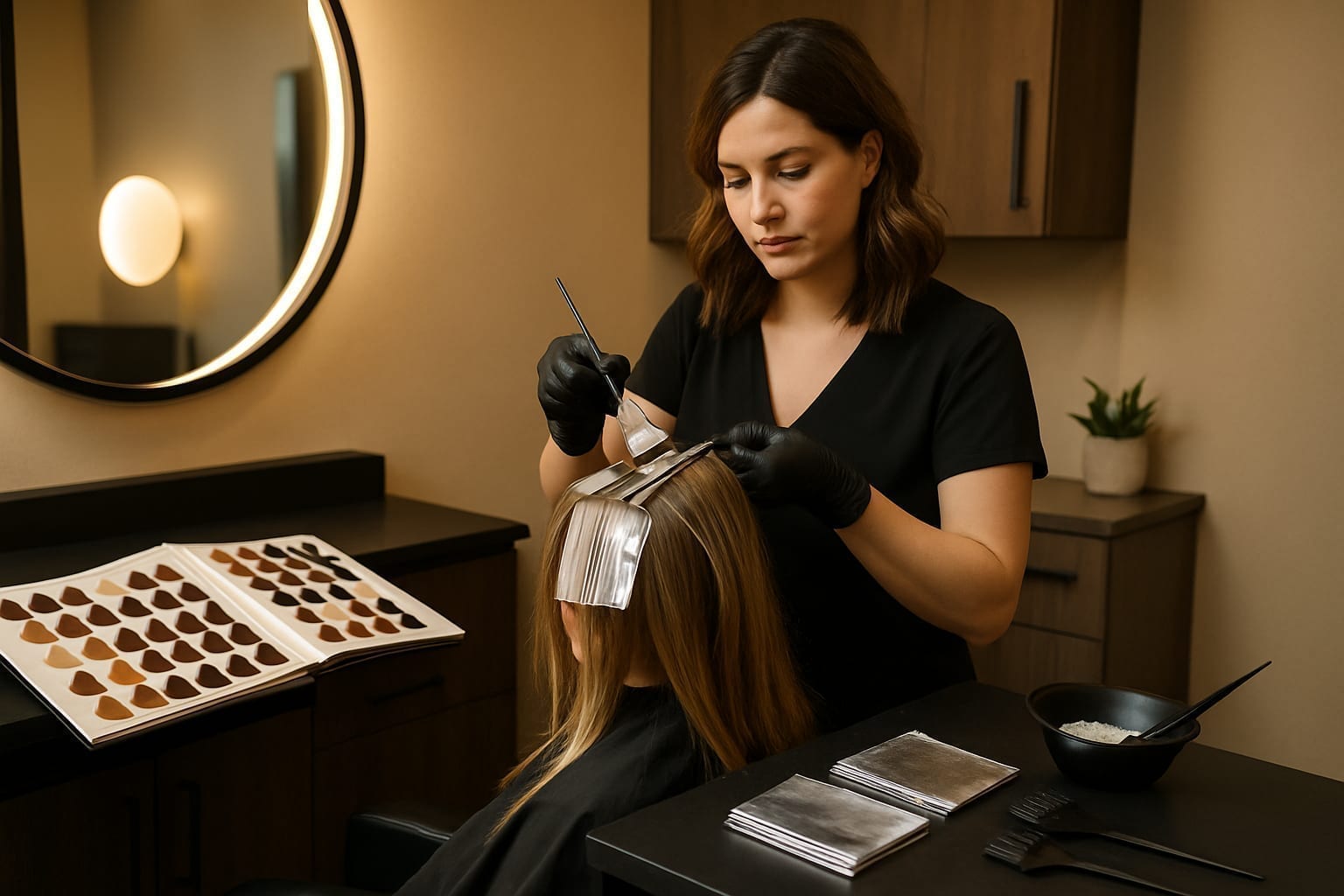
Case examples are anonymized and may combine details from similar cases. Names, numbers and identifying details are changed. They show our process, not a promised result; Google decides every outcome.
Case Summary
A Kansas City color specialist operating inside a salon-suite building was hard-suspended after appending her suite number to her Google Business Profile name and editing her address. The shared building address had already placed her under Google's duplicate-address scrutiny. We corrected the name to match her signage, compiled suite-level proof of her separate business — lease, cosmetology license, and door signage photos — and her listing was reinstated with review history preserved.
Key Takeaways
- ✓ Salon-suite buildings put every stylist under shared-address scrutiny — one keyword-stuffed listing in the building raises suspension risk for everyone at that address
- ✓ Adding a suite number to your business NAME field violates Google's naming policy; the suite belongs in address line 2, and this single edit is one of the most common salon suspension triggers we see
- ✓ Reinstatement appeals for suite-based salons must prove the business is distinct at that address: lease showing the suite number, state cosmetology license, and photos of permanent suite-door signage
- ✓ Self-filed appeals that don't identify the actual trigger usually burn the strongest first-appeal opportunity — the owner appealed the wrong problem before the root cause was diagnosed
The owner had spent three years building her color studio inside a salon-suite building off Ward Parkway in Kansas City. One chair, one room, no walk-in traffic — which meant her Google Business Profile wasn’t marketing support, it was the front door. The review history was on the profile, and new clients had been finding the studio through Google search or Maps.
In early June she made what seemed like an obviously helpful edit: new clients kept wandering the building’s hallways looking for her, so she added her suite number to her profile — both in the address field and, crucially, appended to her business name so it would show right in search results. Soon after the edit, the listing was hard-suspended. No warning email with specifics, just the standard notice that her profile violated Google’s policies and was no longer visible on Search or Maps.
She did what most owners do: appealed on her own, twice, explaining that she was a real licensed stylist with a real lease. Both appeals were denied. By the time she called us, booking inquiries were down to referrals only. This is one of the more distressing situations a solo business owner can face — your entire discovery channel gone with no explanation. Google decides what happens next. Naming the trigger is what changes the file.
Why the Suspension Happened
Salon-suite buildings are a structural problem for Google’s trust systems. The owner’s building housed 34 independent studios behind one street address. To a spam-detection model, dozens of separate businesses claiming a single address looks nearly identical to the virtual-office pattern that fake lead-generation listings abuse. Google doesn’t ban salon suites — they’re explicitly legitimate — but every listing at that address operates under elevated scrutiny.
Her building already had problems she couldn’t see. When we audited the address, at least five other listings there carried keyword-stuffed names like “Balayage & Blonding Specialist KC — [Stylist Name].” That’s the kind of pattern that puts an entire address on Google’s radar.
Then the owner made her edit. The address change alone would probably have survived. But appending ”— Suite 212” to her business name violated Google’s representation policy, which requires the profile name to match day-to-day signage exactly. A name edit on a listing at an already-scrutinized shared address, made through a profile that had recently changed other details, is a classic compound trigger. The automated system didn’t see a stylist helping clients find her door; it saw a listing at a suspicious address modifying its identity.
Our Assessment
Her two self-filed appeals had failed because they argued the wrong case. She’d been defending her legitimacy as a business — but Google had never doubted she existed. The suspension was a policy violation flag, not a fake-business flag, and no volume of “I’m real, here’s my website” evidence addresses that.
We identified three issues, in a specific order of importance: first, the name violation, which had to be corrected before any appeal could succeed; second, the shared-address ambiguity, which meant the appeal needed suite-level — not building-level — proof of her business; and third, the appeal history itself. Two denials meant a third generic attempt risked pushing the case into a much slower review lane. The next appeal had to be complete and correct the first time.
The Recovery Process
We started by fixing the profile to a compliant state. Business name restored to exactly what her door signage read — no suite number, no descriptors. Suite number moved to address line 2, where Google’s format expects it. Categories reviewed and left as “Hair salon” primary with “Hair coloring service” secondary, since category changes mid-appeal create fresh review flags.
Then documentation. For suite-based salons the burden is proving a distinct business at a distinct unit, so we collected her suite license agreement with the suite number visible, her Missouri cosmetology license, a booth-rental payment record tied to the unit, and photos of her permanent door signage showing the exact business name — plus one wider hallway shot placing that door inside the building. That last photo matters more than most people expect; it lets a human reviewer connect the suite to the street address in one glance.
The appeal narrative itself was three short paragraphs: acknowledgment of the specific naming-policy conflict and confirmation it had been corrected, a plain description of the salon-suite arrangement, and an indexed list of the attached evidence. In the cases we handle, we’ve found that appeals which name the violation and show the correction are a clearer file than appeals that argue innocence. The reviewer can see whether the problem they flagged is still on the listing. Google decides.
What we did
Step: the owner’s call. Initial audit identified the name-policy trigger and the shared-address risk profile. The profile was corrected to a compliant name, evidence was collected, and the appeal was submitted on Google’s official path. Google later asked for more proof of operation at the address; booth-rental records and a hallway photo went in with the follow-up. Google later reinstated the listing. Review history intact. Google decides timing — this case is one example, not a guaranteed timeline.
The Business Impact
The owner’s booking book made the damage easy to see. Before the suspension, most of her new-client inquiries came from Google, and color clients rebook on a regular cycle — so a missed new client was more than one appointment.
While the listing was down, inquiries that used to come from Maps went elsewhere. Two of her building neighbors, visible in the same Maps results, absorbed most of those searches. For a single-chair studio with no other acquisition channel, that’s not a marketing dip; it’s a rent-threatening event. Google decides timing — this case is one example, not a guaranteed timeline.
What Salon Owners in Suite Buildings Should Know
The suite number never goes in your business name. It belongs in address line 2, and nowhere else. This is a common self-inflicted suspension we see from suite-based stylists, because it feels helpful rather than risky.
Your address’s other tenants affect your risk. You can’t control a neighbor’s keyword-stuffed listing, but you should know your building’s Google footprint before making any profile edits — changes made at a flagged address carry more risk than the same changes elsewhere.
Bundle profile edits carefully. Multiple identity edits (name, address, categories) in a short window multiply automated scrutiny. Make one change, let it settle, then the next.
Keep suite-level paperwork accessible. Your suite lease, state license, and door-signage photos are your reinstatement kit. Having them ready avoids a stall while documents are gathered. Google decides timing.
Don’t spend your appeals guessing. Each denied appeal makes the next one harder. If the suspension notice doesn’t tell you the trigger — and it usually doesn’t — diagnosing it correctly before appealing matters more than appealing promptly.
Timeline Summary
| Step | Action |
|---|---|
| — | Audit call — naming-policy trigger and shared-address risk identified |
| — | Profile corrected: compliant name restored, suite moved to address line 2 |
| — | Suite lease, MO cosmetology license, rental records, signage photos collected |
| — | Reinstatement appeal submitted with indexed evidence package |
| — | Google evidence request — supplementary proof submitted after the request |
| — | Listing reinstated; review history restored |
| — | Local rankings back to pre-suspension positions |
Suspended in a Salon-Suite Building?
If your salon listing has been suspended — especially inside a suite building where you share an address with other stylists — the trigger is usually identifiable and the order of operations matters. Google decides. Our GBP suspension recovery service starts with diagnosing the actual flag before anything gets submitted. Contact us or call for a case review before you file another appeal.
Frequently Asked Questions
Why do hair salons in salon-suite buildings get suspended on Google so often? +
Can I put my suite number in my Google Business Profile name? +
What documents does Google require to reinstate a suspended salon listing? +
How long does it take to recover a suspended hair salon Google listing? +
Will my reviews come back after a suspension is lifted? +
More Recovery Case Examples
Accounting Firm GBP Suspension After a Virtual Office Move — Columbus, OH
Roofing · Dallas, TXHow One Category Change Collapsed a Roofing Contractor's Google Rankings — and Triggered a Suspension — Dallas, TX
HVAC · Nashville, TNNashville HVAC Contractor's GBP Suspended After a Single Failed Video Verification — How a 6-Year-Old Listing Was Restored
Pushpender Sodlan
Google Ads Partner (not GBP access)
GBP Recovery Specialist · Founder, GBP Fixers
Pushpender has personally led the management of many suspended Google Business Profile cases. He works with business owners to prepare guideline-aligned appeals. Google decides whether a listing returns. The workflows documented in this case example reflect his team's process.
LinkedIn · Connectively · About the author · All case examples